


































Unions Fight New EHRC Trans Toilet Guidance Rules
Major UK unions including Unison and the NUS say they will resist new EHRC guidance restricting transgender women's access to female-only spaces at work.

New code prompts union backlash
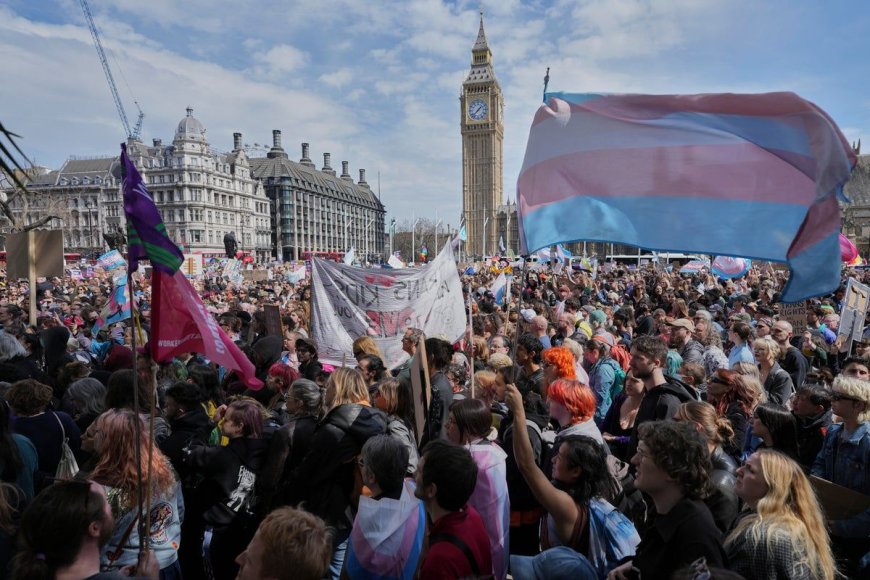
A significant clash is unfolding between some of Britain's largest trade unions and the Equality and Human Rights Commission over updated guidance governing access to single-sex spaces such as toilets and changing rooms. Unison, one of Labour's most influential union backers, has said it will push back against every employer that adopts the new rules, while the National Union of Students has told its members to actively resist the guidance in university settings.
The EHRC's updated code took effect earlier this month, arriving after the Supreme Court ruled last year that, for the purposes of the Equality Act, transgender women do not meet the legal definition of women. Under the revised guidance, transgender individuals must use either gender-neutral facilities or those matching their biological sex. The rules apply to organisations providing services to the public — shops, gyms, restaurants and hospitals among them — though they do not extend to cover every workplace setting.
Unison pledges to "take the fight" to employers
Andrea Egan, general secretary of Unison, has been among the most vocal critics of the new code. In a video statement posted on social media, she said more than 600 members had contacted the union describing the guidance as unworkable in practice, and expressed alarm that a number of employers had already withdrawn trans equality policies in response to the changes. She described that response as unacceptable and said she would work with the union's network and equality teams to press every workplace toward what she called trans-inclusive practices.
The National Union of Students, which represents around seven million students, has gone further still in its practical response, distributing material to members that encourages setting up gender-inclusive sports teams, displaying trans rights materials on toilet doors, and lobbying university leadership directly. Avery Greatorex, the NUS vice-president for liberation and equality, argued that the EHRC's legal advice was not impartial, characterising it instead as shaped by what they described as the gender-critical movement, and called on activists to resist policies they view as trans-exclusionary.
Medical and other union voices weigh in
The debate has also drawn in healthcare professionals. Emma Runswick, deputy chair of the British Medical Association's council, said doctors want to be able to treat patients across all gender identities, and voiced concern that the new code sits awkwardly with the practical realities of NHS services, many of which she said are not currently well equipped to provide dignified care for transgender patients. Beyond Unison and the NUS, other major unions including Unite, GMB and the University and College Union have criticised the guidance since an earlier draft version was first published in May.
Not every voice within the movement agrees
The unions' stance has not gone unchallenged from within their own ranks. Lisa Lockey, a nurse who left Unison in 2024 after the union's then-president used strong language to describe critics of trans-inclusive policy, said she now feels she deserves a refund for three decades of membership fees, arguing the union has consistently downplayed the safety and privacy concerns of its female members.
Fiona McAnena of the campaign group Sex Matters was similarly forthright, accusing unions of prioritising the concerns of trans-identifying members over women's rights to safety and dignity in workplace settings. She argued that many unions have failed to adequately support female members who have faced difficulties at work for stating that biological sex is a matter of fact.
Unions maintain existing internal policies
For its part, Unison has said its official policy continues to recognise trans women as women, trans men as men, and non-binary identities as valid, even as it works to comply with the Supreme Court's ruling and a related decision from the certification officer. The union described the impact on trans, non-binary and gender-diverse members as devastating, and said it intends to campaign for a change in the law that would bring legislation into line with its own internal policy position.
The NUS struck a similar note, stating that transgender students should always feel welcome on campuses and describing its guidance as offering practical routes for students who wish to keep colleges and universities as trans-inclusive spaces, regardless of the EHRC's revised code.
A guidance battle likely to run and run
With unions representing millions of workers openly signalling they intend to push back against the new code, employers across sectors from retail to healthcare to higher education now face the prospect of navigating conflicting pressures — legal guidance shaped by a Supreme Court ruling on one side, and vocal union opposition demanding continued trans-inclusive practices on the other. How that tension resolves in individual workplaces, and whether it prompts further legal challenges or clarifying guidance from the EHRC, looks set to remain one of the most closely watched employment and equalities stories in Britain in the months ahead.
What's Your Reaction?
 Like
0
Like
0
 Dislike
0
Dislike
0
 Love
0
Love
0
 Funny
0
Funny
0
 Angry
0
Angry
0
 Sad
0
Sad
0
 Wow
0
Wow
0