
























UK Drones Hit Russia: Moscow Threatens Consequences
Russia has warned the UK it will "pay a price" after reports that British-made drones supplied to Ukraine struck targets deep inside Russian territory.

Russia Accuses Britain of "Escalation" Over Drone Strikes
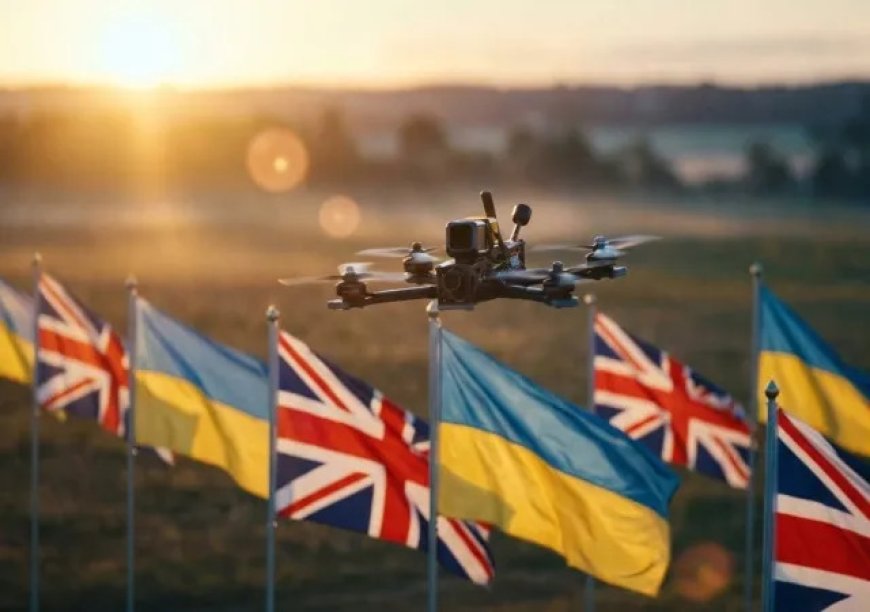
A fresh diplomatic row has erupted between London and Moscow after reports surfaced that drones built by British manufacturers have been deployed by Ukraine in a series of long-range strikes against military and industrial sites inside Russia.
The claims, first reported by The Sunday Times, named a subsidiary of defence giant BAE Systems as one of two UK-based firms whose technology has featured in Kyiv's deepening campaign against targets far from the front line. The newspaper did not identify the second company, citing security concerns.
Russia's response was swift and unambiguous. In a statement issued on Monday, the Russian embassy in London accused the UK of becoming "an accomplice and co-perpetrator" in the strikes, and said Britain was "deliberately opting for an escalation" of the war. The embassy went further, warning that the deeper the UK's involvement in supporting Ukraine, the "higher the price it will pay."
What the Statement Actually Said
Russian officials framed their warning in stark terms, suggesting that London's actions "will inevitably carry consequences for which it will have to answer." The language mirrors previous Kremlin rhetoric aimed at Ukraine's Western backers, but the direct naming of British firms marks an unusually specific escalation in tone.
The claims come against the backdrop of a broader shift in the war's character. Ukraine has significantly expanded its long-range strike campaign in recent months, hitting fuel depots, logistics hubs and industrial sites well beyond the immediate conflict zone. Days before the Russian statement, hundreds of drones were reported to have targeted the Moscow region, damaging a distribution warehouse and underlining how the war is increasingly being felt away from the traditional front lines.
Moscow, for its part, has continued to intensify its own missile and drone bombardments of Kyiv and other Ukrainian cities, a pattern that has persisted throughout the conflict.
Downing Street's Response
The UK government moved quickly to address the Kremlin's warning. Prime Minister Andy Burnham, responding to questions on Tuesday about what message he had for Russian President Vladimir Putin, said the UK was continuing to back Ukraine unconditionally.
He said Britain's support was rooted in enabling Ukraine to defend itself against what he described as an illegal invasion, and stressed that this position had remained consistent across successive UK governments since the war began. He added that Britain would not abandon Ukraine at a difficult moment in the conflict.
The Ministry of Defence issued its own short but firm response on Monday night, stating simply that Britain stands shoulder to shoulder with Ukraine. Officials did not directly confirm or deny the specifics of the Sunday Times report regarding the two named companies.
A Deepening Financial and Military Commitment
The UK has positioned itself as one of Ukraine's most consistent international backers since Russia's full-scale invasion began in February 2022. Government figures put total UK support at around £25 billion, of which roughly £16 billion has gone toward military assistance, including equipment, training and, increasingly, technology used in long-range operations.
That scale of commitment has made Britain a repeated target of Kremlin criticism, but this latest warning is notable for directly implicating named UK companies rather than the government alone. Defence analysts say this could reflect Moscow's attempt to apply pressure not just diplomatically, but on the commercial defence sector supplying Kyiv.
Why This Matters for British Readers
For ordinary people in the UK, the story raises fresh questions about the risks and responsibilities that come with being a leading arms supplier to a country at war with a nuclear-armed power. It also puts fresh scrutiny on UK defence exports and the extent to which British-made equipment is shaping the course of the conflict far from British shores.
Politically, the episode places the government in a familiar bind: balancing solidarity with Ukraine against the risk of provoking a more direct confrontation with Moscow. Opposition politicians are likely to press ministers for greater transparency on what exactly UK-supplied technology is being used for, and how far the government is willing to go in supporting Ukraine's expanding strike capabilities.
What Happens Next
Neither the UK government nor BAE Systems has confirmed the precise nature of the drones' involvement, and it remains unclear whether Russia's warning will translate into any specific retaliatory action. However, with Ukraine showing no signs of scaling back its long-range campaign, and Moscow continuing its own strikes on Kyiv, the risk of further diplomatic flashpoints between London and Moscow appears likely to grow in the weeks ahead.
For now, the government's message is one of continuity rather than change: unwavering backing for Ukraine, even as the war's reach extends further into Russian territory — and further into the diplomatic relationship between London and Moscow.
What's Your Reaction?
 Like
0
Like
0
 Dislike
0
Dislike
0
 Love
0
Love
0
 Funny
0
Funny
0
 Angry
0
Angry
0
 Sad
0
Sad
0
 Wow
0
Wow
0