































Record 230 Migrants Cross Channel in Single Boat as Crossings Spike Despite UK-France Deal
French officials say a record 230 people crossed the Channel in one dinghy, days after a separate boat carrying over 150 migrants capsized, reigniting scrutiny of UK-France border policy.

A New and Troubling Record
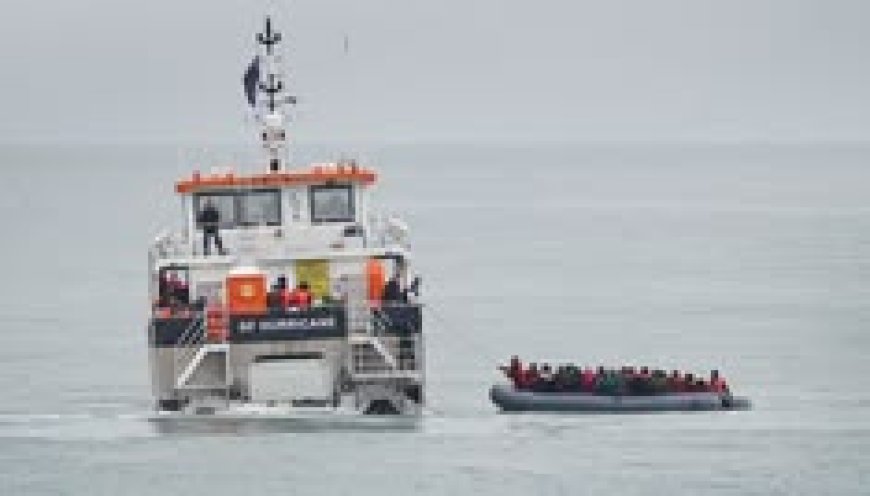
French maritime rescue officials say a single small boat carrying 230 people has crossed the English Channel toward the UK — a new record for the number of passengers packed onto one vessel, and a stark illustration of a trend rescue workers say has been building for months. The figure surpasses the previous record of 165 people on a single boat, set only a month earlier.
According to the French sea rescue service SNSM, the vessel involved was roughly 15 metres long — a rigid, inflatable dinghy of a type local rescuers say has become increasingly common on the crossing over the past three months. The organisation's local branch director, Jean-Marc Lamblin, described the development as a new and troubling milestone in the sheer number of people being crammed onto boats built for a fraction of that capacity.
French lifeboats escorted the dinghy toward British waters before handing over to UK vessels for the remainder of the journey, in line with established search-and-rescue protocols between the two countries.
A Near-Miss Days Earlier
The record crossing came just days after a separate, deeply alarming incident in the same stretch of water. A UK-bound dinghy carrying more than 150 people capsized after its engine caught fire, triggering a major search-and-rescue operation involving both French and British agencies. The incident served as a grim reminder of the risks inherent in a crossing that has already claimed dozens of lives in recent years, even as the boats used to attempt it have grown larger and, in many cases, more overcrowded.
The Numbers Behind the Debate
The scale of Channel crossings has become one of the most politically charged issues in British public life, and the underlying statistics tell a genuinely mixed story. Home Office and parliamentary data show that roughly 39,000 people arrived in the UK by small boat in the year to March 2026, accounting for around 90% of all detected unauthorised arrivals. Of those, around three-quarters were adult men, with women making up roughly 12% and children around 13%.
At the same time, the UK government points to a more encouraging trend over the first half of this year specifically: arrivals in that period were down more than 42% compared with the same window in 2025, falling to just over 14,000. Ministers have credited that improvement in part to a new three-year enforcement deal signed with Paris in April, under which the UK agreed to pay up to €766 million to strengthen French policing and interception efforts along the coast.
Recent Weeks Tell a Different Story
That progress has come under pressure in recent weeks. Crossings picked up sharply through late July, culminating in a daily record for the year on 29 July, when 752 people made the journey in a single day. The record-breaking 230-person boat and the near-catastrophic capsize that preceded it both fit into this more recent, more volatile pattern — one that has complicated the government's narrative of a policy that is clearly working.
Researchers who track the issue closely note that the nationalities of those making the crossing have shifted and diversified over time, and that asylum grant rates for people arriving via small boat — historically around 62% between 2018 and 2025 — have tended to run higher than for asylum applicants overall, reflecting the mix of countries people are arriving from.
Where the Debate Goes Next
The combination of a record-breaking boat, a near-fatal capsizing and a documented late-summer spike is likely to intensify pressure on the new government to demonstrate that its enforcement strategy, and the money committed to it, are delivering durable results rather than a temporary dip followed by a rebound. Opposition voices, including Reform UK, have consistently argued that existing measures are insufficient, while the government continues to point to the first-half figures as evidence its approach is working, even as the past fortnight has complicated that case considerably.
With late summer historically a period of calmer seas and, correspondingly, higher crossing numbers, officials on both sides of the Channel are likely to face continued scrutiny over the coming weeks as to whether July's spike was an aberration or the start of a longer upward trend.
Next Article
What's Your Reaction?
 Like
0
Like
0
 Dislike
0
Dislike
0
 Love
0
Love
0
 Funny
0
Funny
0
 Angry
0
Angry
0
 Sad
0
Sad
0
 Wow
0
Wow
0