






























Police Chiefs Demand PM Burnham Block Early Release of PC Harper's Killers
All 50 UK police chiefs have written to PM Andy Burnham demanding action to stop the early release of PC Andrew Harper's killers. Fifty police chiefs across Britain have signed an unprecedented joint letter urging Prime Minister Andy Burnham to prevent the early release of two men convicted over the death of PC Andrew Harper. The intervention has intensified pressure on the government's early release scheme just months before the killers were due to walk free.

Every Police Chief in Britain Unites Behind PC Harper's Family
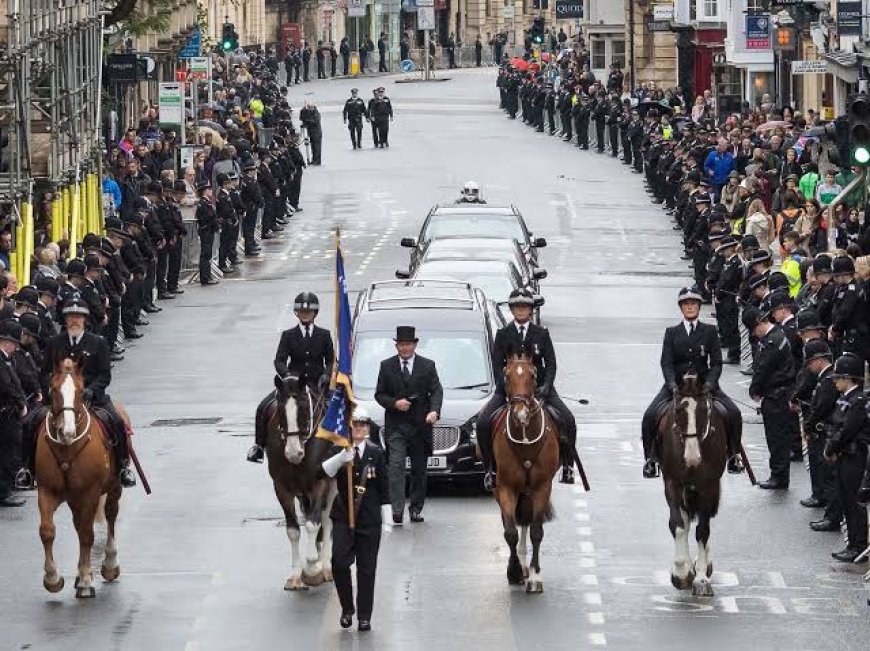
In a show of unity rarely seen in British policing, every chief constable in the country has put their name to a letter demanding Prime Minister Andy Burnham intervene to stop the early release of the men convicted over the death of PC Andrew Harper. The extraordinary joint letter, coordinated by the National Police Chiefs' Council, was sent to Downing Street this week and has reignited a national debate over how far the government's controversial early release scheme should stretch.
PC Harper, 28, died in August 2019 after being dragged for more than a mile behind a car near Sulhamstead in Berkshire. He and a colleague had responded to reports of a stolen quad bike when he became caught in a tow rope trailing from the getaway vehicle. Three teenagers — Henry Long, Jessie Cole and Albert Bowers — were later convicted of manslaughter rather than murder, a verdict that sparked outrage among policing figures and the wider public at the time.
Under sentencing terms handed down at the Old Bailey, Cole and Bowers were expected to serve roughly half of their custodial terms before automatic release. That release date, campaigners say, has now moved forward under a government scheme designed to relieve overcrowding in prisons across England and Wales — a plan that would see around 5,000 offenders freed earlier than originally scheduled.
A Letter With No Precedent
What sets this intervention apart is its scale. The letter carries signatures from every police chief constable in England, Scotland, Wales and Northern Ireland, alongside the head of Jersey's police force, senior figures from the National Crime Agency and representatives of the military police. Among the signatories is Metropolitan Police Commissioner Sir Mark Rowley and Greater Manchester's Chief Constable Stephen Watson — the force overseeing the region the prime minister himself once served as mayor.
The letter frames the case as more than a single tragedy. It raises what the chiefs describe as a "wider question" about public trust: when a court hands down a sentence for an exceptionally serious offence, how much confidence can victims and bereaved families place in that sentence if later policy changes result in offenders walking free significantly earlier than expected. The chiefs stopped short of arguing that a police officer's life carries more weight than any other victim's, but said the case exposes a systemic issue affecting families across the country who now fear their own cases could be reopened by unexpected early release.
Burnham Under Pressure to Act
The letter lands at a delicate moment for Andy Burnham, who became prime minister only weeks ago after succeeding Sir Keir Starmer. Burnham has publicly stated he believes the government can go "much further" to prevent the release of PC Harper's killers and has instructed his Justice Secretary to explore every lawful avenue to keep them behind bars. Deputy ministers, including Angela Rayner, have echoed that commitment in broadcast interviews, insisting Burnham is determined to find a legally sound solution.
Despite that public reassurance, critics — including opposition figures — argue the situation reveals confusion at the heart of government over how the early release scheme should apply to the most serious violent offences. Some have accused ministers of shifting their position depending on public reaction rather than working from a fixed principle, a charge Downing Street rejects.
PC Harper's Family Speak Out
For PC Harper's widow, Lissie Harper, the renewed controversy reopens wounds that have never fully healed. She has spent years campaigning for tougher sentencing for those who kill emergency workers, previously calling for a change in the law — dubbed "Andrew's Law" — that would introduce mandatory whole-life terms for offenders who kill police officers in the line of duty. Family members have used broadcast appearances this week to appeal directly to the prime minister, arguing that every day of the original sentence should be served in full.
What Happens Next
The government has not yet confirmed how, or whether, it will amend the early release framework specifically for this case. Legal experts note that any bespoke carve-out risks opening the door to further challenges from other families demanding similar treatment, while campaigners for prison reform warn that reversing course on the scheme could undermine efforts to ease chronic overcrowding across the prison estate.
For now, the pressure sits squarely with Number 10. With fifty police chiefs speaking as one voice and a grieving family watching closely, Andy Burnham's next move on this case is likely to shape public perception of his government's approach to law and order for months to come.
What's Your Reaction?
 Like
0
Like
0
 Dislike
0
Dislike
0
 Love
0
Love
0
 Funny
0
Funny
0
 Angry
0
Angry
0
 Sad
0
Sad
0
 Wow
0
Wow
0