





























UK £1.8bn Deficit Piles Pressure on Chancellor Healey
UK public borrowing hit £1.8bn in July, defying forecasts, as Chancellor John Healey prepares his first Budget amid rising gilt yields and debt.

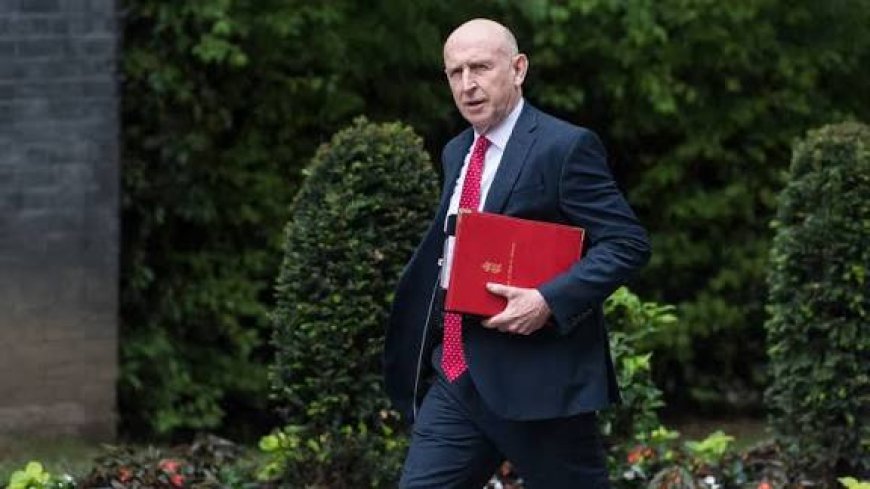
Government borrowing defies expectations in blow to Treasury
Britain's public finances took an unwelcome turn last month, with official figures showing the government borrowed £1.8 billion more than it raised in July, confounding City economists who had pencilled in a balanced budget for the month. The shortfall, published by the Office for National Statistics, lands squarely on the desk of Chancellor John Healey as he begins assembling his first Budget since taking on the role.
July is typically a strong month for the Treasury's coffers, buoyed by self-assessment income tax receipts from millions of workers and business owners. This year proved no exception on the revenue side — self-assessment payments reached £17.1 billion, some £1.7 billion higher than the same month last year. Yet even that uplift wasn't enough to keep the government in the black, as spending continued to outstrip the extra income coming in.
Widen the lens to the first four months of the current financial year, and the picture looks somewhat healthier than last year's equivalent period, with a cumulative deficit of £56.7 billion. The trouble is that this figure still runs £2.3 billion ahead of what the independent Office for Budget Responsibility had pencilled into its forecasts, leaving Healey with a growing gap to explain when he stands up in the Commons on 28 October.
A trickier inheritance than spring predicted
When Rachel Reeves delivered her spring statement back in March, she was working with a comparatively comfortable £23.6 billion of headroom against her self-imposed fiscal rules. Much has changed since then. The eruption of the Iran war shortly afterwards helped set off a chain of economic pressures that analysts say have eaten steadily into that buffer — higher inflation, softer growth, and, critically, a jump in the cost of government borrowing itself.
Yields on UK government bonds, effectively the interest rate investors demand to lend to Britain, have climbed above 5 per cent on ten-year gilts in recent days. Economists point to lingering anxiety over energy-driven inflation as the main culprit. For a country carrying a debt pile as large as Britain's, even modest moves in borrowing costs translate into real money, gradually pushing up the annual bill the Treasury must pay just to service existing debt as it rolls over.
Compounding matters, Healey is under pressure from several directions at once. There are calls to loosen spending plans inherited from his predecessors, an unfunded defence commitment that needs paying for, and ongoing ambitions around housing and infrastructure that Labour campaigned on delivering. Notably, defence spending is a subject Healey knows intimately — he resigned as defence secretary back in June after arguing the department's budget settlement fell short of what the country's security needs demanded.
Debt now equivalent to 94% of GDP
The scale of the challenge is laid bare in the ONS's wider figures. Total public sector debt stood at £2.98 trillion at the end of July, equivalent to 94 per cent of national income — a rise of £96 billion compared with a year earlier. Ministers have consistently framed this borrowing as investment-driven, arguing it reflects Labour's strategy of funding infrastructure projects that will pay dividends over the longer term, rather than day-to-day spending running out of control.
Responding to the figures, the Chancellor struck a defiant note, insisting fiscal discipline remains central to the government's approach and pointing to Britain's deficit reduction as faster than any other G7 economy. He also highlighted efforts to ease cost-of-living pressures and support young people into employment, signalling those priorities are likely to feature prominently when the Budget details finally emerge in October.
A rare bright spot for growth
It wasn't all bad news on Friday. A closely watched survey of purchasing managers, compiled by S&P Global, suggested the UK economy actually picked up speed in August, with private sector output expanding at its fastest pace since April. Much of that momentum came from the services sector, and the survey's authors suggested it could translate into economic growth of around 0.3 per cent for the third quarter.
That modest silver lining may offer Healey a little more room for manoeuvre than the borrowing figures alone would suggest, though economists caution that stronger near-term growth won't necessarily offset the structural pressures building on the public finances. With bond markets jittery and defence and public service demands mounting, the coming weeks of Budget preparation are shaping up to be among the most closely scrutinised of Labour's time in office so far. All eyes will now turn to how much of the £23.6 billion buffer survives by the time Healey delivers his statement in October, and whether tax rises, spending cuts, or a mixture of both will be needed to keep the government's fiscal rules intact.
Next Article
What's Your Reaction?
 Like
0
Like
0
 Dislike
0
Dislike
0
 Love
0
Love
0
 Funny
0
Funny
0
 Angry
0
Angry
0
 Sad
0
Sad
0
 Wow
0
Wow
0