













Burnham's Number 10 North Hands Power to UK Mayors
Prime Minister Andy Burnham has unveiled a fresh package of devolution measures, including the secondment of senior civil servants to mayoral offices and a new cross-party "virtual situation room" bringing together England's regional mayors. The announcement builds on the Number 10 North initiative he launched shortly after taking office last month.

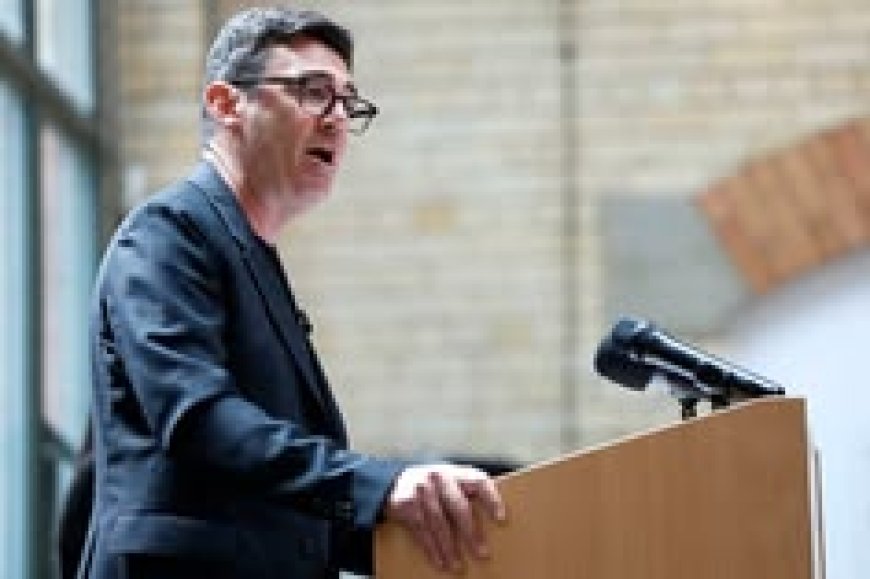
Prime Minister Andy Burnham has announced a fresh wave of measures designed to shift power away from Westminster and into the hands of England's regional mayors, in what Downing Street is billing as the country's biggest transfer of authority from central government "in a generation."
The announcement, made on Friday, forms the latest strand of Number 10 North, the northern policy hub Burnham opened within weeks of entering Downing Street. Under the plan, high-performing civil servants will be seconded from Whitehall departments into mayoral offices, including Greater Manchester's, for placements lasting between six and nine months. Officials say the pilot scheme is intended to embed central government expertise directly within regional administrations rather than leaving it concentrated in London.
Speaking as the initiative was unveiled, Burnham said the scheme was about putting "more power into every postcode across the country" so that local communities could unlock their own economic and social potential. He framed the move as part of a deliberate break from what he described as a Westminster habit of hoarding decision-making authority.
The centrepiece of Friday's announcement is a new "virtual situation room," convened by Number 10 for the first time and bringing together mayors from across the political spectrum to work jointly on shared challenges. Burnham said the format was designed to encourage cross-party collaboration rather than the point-scoring that has often characterised relations between local and central government. Mayors representing city regions of differing political control are expected to take part, reflecting the government's stated ambition to treat devolution as a practical governing tool rather than a partisan project.
Alongside the mayoral secondments, the package includes an expansion of the Civil Service Fast Stream, with a new pilot specifically targeting Yorkshire and Humber. The scheme is intended to build a pipeline of graduate talent that develops careers outside the capital, addressing long-standing criticism that fast-track civil service recruitment has been overwhelmingly London-centric. The government also confirmed that the Civil Service Future Leaders Scheme, which is aimed at developing high-potential officials, will be widened to include staff working within mayoral and local authority structures for the first time.
The announcement comes almost a month after Number 10 North formally opened, and just over a month since Burnham became prime minister following Keir Starmer's resignation. Burnham, who spent close to a decade as mayor of Greater Manchester before returning to Parliament, has made devolution a defining theme of his early premiership, alongside pledges to tackle the cost of living and rebuild trust in politics after a turbulent run of Downing Street tenures.
Government figures argue that placing experienced Whitehall officials inside regional institutions will help mayors deliver policy more quickly on issues such as transport, housing and skills, areas where city region leaders have long complained that they lack either the staff or the technical capacity to match Westminster departments. Critics, however, are likely to question whether six-to-nine month secondments are long enough to build lasting institutional capability, and whether the initiative amounts to a genuine transfer of power or a more limited administrative gesture.
The devolution drive lands at a delicate political moment for the prime minister. Burnham took office in July following a period of turmoil within the governing party, and has repeatedly framed his agenda around economic renewal, ending long-term rough sleeping, and reforming social care through closer partnership with local government. His allies argue that empowering regional mayors, several of whom built their own profiles as effective local leaders, can help the government demonstrate visible improvements in communities faster than Whitehall-led delivery has managed in the past.
Opposition parties are expected to press the government on how the scheme will be funded and whether it represents new money or a reallocation of existing civil service resources. Local government bodies broadly welcomed the direction of travel, though some called for firmer, longer-term commitments beyond pilot programmes.
For Burnham personally, the initiative also reinforces the political identity he built as mayor of Greater Manchester, where he championed bringing the region's bus network back under public control and positioned the city-region as one of the fastest growing in the UK. Supporters say translating that experience into national policy could become a defining feature of his premiership; sceptics will be watching to see whether Friday's announcement produces measurable change or remains largely symbolic.
The government has not set a fixed end date for the mayoral secondment pilot, saying its ongoing progress will be reviewed before any decision on expanding it further.
Next Article
What's Your Reaction?
 Like
0
Like
0
 Dislike
0
Dislike
0
 Love
0
Love
0
 Funny
0
Funny
0
 Angry
0
Angry
0
 Sad
0
Sad
0
 Wow
0
Wow
0