



























UK Flash Flood Warnings Amid Drought-Hit Ground
The Met Office has warned of flash flooding as heavy rain batters drought-stricken parts of the UK, with Wales and most of England still in drought.

Downpours bring flooding risk to parched landscape
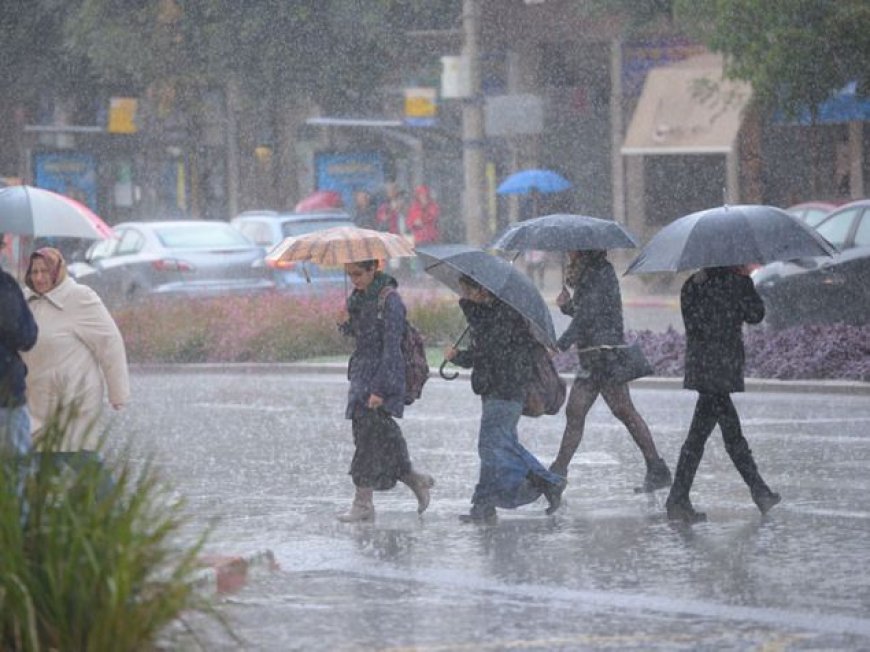
A spell of heavy rain sweeping across the UK this week has prompted forecasters to warn of flash flooding, even as much of the country continues to grapple with one of the driest and hottest summers in recent memory. The Met Office said the sudden shift toward wetter weather, following a run of showers on Wednesday and Thursday, carries real risks precisely because the ground beneath it has become so compacted and dry that water is struggling to soak in.
The scale of the dry spell preceding this week's rain is stark. Wales is now entirely in drought, and close to three-quarters of England shares that designation, following a summer marked by repeated heatwaves. Against that backdrop, the sight of localised flooding might seem paradoxical, but experts say the two conditions — drought and flash flooding — can and often do coincide when intense rain lands on soil that has effectively hardened in the heat.
Where the rain has fallen hardest
Data gathered by the Environment Agency shows the north-west of England bore the brunt of the wettest conditions, with 52.5mm of rain recorded in the Lancashire town of Morecambe over a 24-hour period. To put that in context, this single day's rainfall amounted to roughly a third of the entire region's average precipitation across the whole of June, July and mid-August this year, which totalled around 156mm according to Met Office figures.
Southern England did not escape the deluge either. A monitoring station at Pevensey Bay in East Sussex logged 32mm of rain across the same 24-hour window. Craig Snell, a senior Met Office meteorologist, described the shift as a significant change in conditions compared with the pattern seen across much of the UK over the preceding couple of months, though he noted that the intensity has varied considerably by region.
Localised flooding already reported
Some of the impacts have already materialised. Snell confirmed that parts of the north-west and stretches of England's south coast experienced localised flooding over the past day, a direct consequence of rain falling faster than the sun-baked ground could absorb it. Showers were expected to persist near coastal areas into Thursday evening before easing across inland regions overnight, giving way to clearer conditions in places.
Looking ahead, Friday is expected to bring further showers to most parts of the UK, though forecasters do not anticipate them being as widespread or heavy as those seen on Thursday. Thunderstorms remain a possibility overnight across parts of Wales and western England. A drier, sunnier weekend is on the cards, with temperatures expected to sit in the low twenties across southern areas and range from high teens to low twenties further north — before yet more rain, largely in shower form and moving in from the south-west, is forecast to arrive early next week.
Drought conditions far from resolved
Despite the recent downpours, officials have been at pains to stress that the underlying drought situation remains serious. The Department for Environment, Food and Rural Affairs confirmed that conditions continue to worsen in several respects even as rain falls, and the National Drought Group — a body bringing together the Met Office, government representatives, water companies, farmers, and conservation organisations — has shifted to holding weekly meetings as part of its response.
Reservoir levels paint a sobering picture, currently sitting at 62.6 per cent capacity nationally, some 16.3 percentage points below what would typically be expected for this point in the year. Last week, the government unveiled a £65 million support package for farmers, many of whom have reported bringing in their earliest harvest in two decades as heat stress and dry conditions took their toll on crop yields.
Philip Duffy, chief executive of the Environment Agency and chair of the National Drought Group, acknowledged the summer's toll on both farming and wildlife, welcoming the recent rain as badly needed while cautioning that it falls well short of resolving the broader drought picture. He urged households and businesses to continue conserving water to help stretch existing reserves through the coming months.
River Severn abstraction limits sought
In a further sign of the pressure facing the UK's water systems, the Environment Agency and Natural Resources Wales have jointly applied for a drought order covering the River Severn, citing the strain the dry conditions have placed on the river's ecology and the farmers who depend on it. If approved, the order would require four major suppliers — Severn Trent Water, South Staffordshire Water, Bristol Water and Hafren Dyfrdwy — to cut the amount of water they draw from the river by 5 per cent, though the companies involved say this would not affect customer supplies.
Hydrologists caution that any meaningful recovery will take time. Dr Katie Facer-Childs of the UK Centre for Ecology & Hydrology said river flows and reservoirs typically need several months of sustained wetter weather to return to normal levels, and that current seasonal forecasts suggest an unusually wet autumn and winter is far from guaranteed. Without one, she warned, low river flows are likely to persist into the new year, particularly across the south-east, leaving parts of the country vulnerable to a return of drought conditions as early as next year.
What's Your Reaction?
 Like
0
Like
0
 Dislike
0
Dislike
0
 Love
0
Love
0
 Funny
0
Funny
0
 Angry
0
Angry
0
 Sad
0
Sad
0
 Wow
0
Wow
0