

































UK Cinemas Weigh Meta Smart Glasses Ban Over Piracy
The UK Cinema Association says all major chains are reviewing policies on Meta's camera-equipped smart glasses, as piracy and privacy concerns mount nationwide.

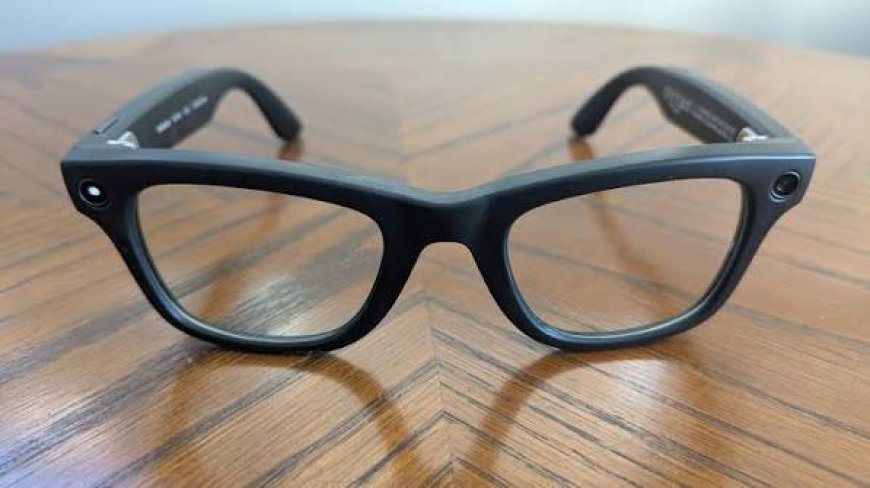
Cinema operators across the UK are reviewing whether to restrict or ban Meta's camera-equipped smart glasses inside auditoriums, amid growing concern that the devices could be used to secretly record films and fuel piracy.
The UK Cinema Association, the trade body representing the country's major chains, confirmed this week that all leading operators are now examining their policies on the eyewear. While no chain has yet introduced a formal blanket ban, the association said several are actively exploring rules that would prohibit or restrict customers from wearing camera-enabled smart glasses during screenings. A spokesperson said discussions remain ongoing and that no unified, nationwide policy has yet been agreed across the sector.
The glasses in question, produced by Meta in partnership with Ray-Ban and Oakley, feature a camera built directly into the frame, allowing wearers to record video in a manner critics say is far less obvious than filming with a smartphone. That discretion has earned the devices unflattering nicknames among privacy campaigners, who have dubbed them "spy glasses" in reference to concerns that people can be filmed without their knowledge or consent.
For the cinema industry specifically, the worry centres on piracy rather than privacy alone. The UK Cinema Association estimates that copyright infringement costs Britain's creative industries a minimum of £500 million every year, with more than 90 percent of illegal copies of newly released films traced back to recordings made inside cinemas themselves, typically using compact devices such as phones. Industry figures say the emergence of camera-equipped eyewear risks giving pirates a new, harder-to-detect method of recording screenings, at a time when illegal streaming and file-sharing remain a persistent drain on box office and licensing revenue. According to the Film Content Protection Agency, staff across UK cinemas identified, disrupted or reported 121 separate illegal recording incidents last year alone.
Other venues have already moved to set their own rules. Wetherspoons confirmed it will allow customers to wear the glasses on its premises but has banned the recording function, treating the devices in much the same way it already treats smartphones. Theatre operator ATG, which runs venues including the Edinburgh Playhouse and the Bristol Hippodrome, has said it will not permit performances to be recorded using the glasses, although it has stopped short of banning the eyewear outright. The strictest response so far has come from the justice system: His Majesty's Courts and Tribunals Service has confirmed that Meta glasses are prohibited inside courts and tribunals altogether, in line with long-standing rules against photography and filming in those settings.
Cinemas, however, face a more complicated balancing act than courtrooms or pubs. The UK Cinema Association acknowledged that operators must weigh piracy and privacy risks against the accessibility benefits the technology can offer, particularly for customers who are blind or have low vision and rely on built-in audio description or AI-assisted features. That tension has left chains reluctant to move as decisively as venues with narrower use cases.
Meta has pushed back firmly against the prospect of a ban, arguing that the glasses provide what it called critical technology for people in the blind and low-vision community. A company spokesperson said restricting how people use the devices would represent a significant step backwards for accessibility, while acknowledging that some venues, such as courtrooms, are reasonably entitled to prohibit filming altogether. The company also pointed to a built-in recording indicator light, arguing that the glasses are in some respects more transparent than ordinary smartphones, which have no equivalent visual cue when capturing footage.
The debate is not confined to Britain. In Germany, the national data protection authority has indicated that Meta's smart glasses could fall foul of existing laws prohibiting recording devices concealed within everyday objects, suggesting that regulatory pressure on the technology is intensifying across Europe more broadly. UK regulators and industry bodies are understood to be monitoring how continental authorities approach the issue as they weigh their own next steps.
For now, moviegoers heading to UK cinemas this weekend will not face a blanket ban on the eyewear. But with the UK Cinema Association acknowledging that "how individual chains resolve that balance is expected to shape the industry's approach" in the months ahead, and pressure building from rights holders, campaigners and rival venues that have already acted, a more formal, sector-wide policy could arrive sooner rather than later.
What's Your Reaction?
 Like
0
Like
0
 Dislike
0
Dislike
0
 Love
0
Love
0
 Funny
0
Funny
0
 Angry
0
Angry
0
 Sad
0
Sad
0
 Wow
0
Wow
0