

























UK's Best Solar Eclipse in a Generation Dazzles Skywatchers Tonight
Millions across the UK looked skyward this evening as a deep partial solar eclipse swept over Britain, covering up to 96% of the sun in the country's most dramatic eclipse since 1999. The rare event coincided with the peak of the Perseid meteor shower, creating a bumper night for stargazers nationwide.

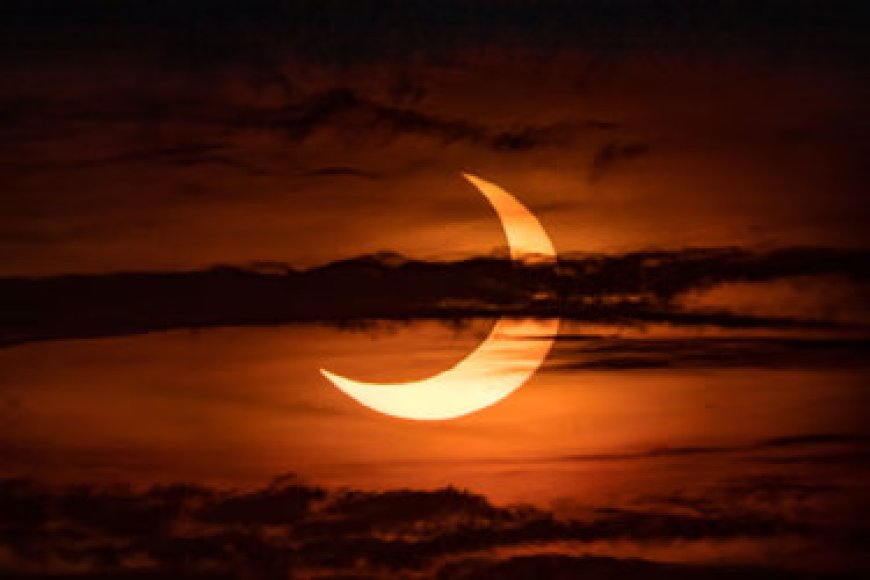
Skies Over Britain Darken as Deep Partial Eclipse Sweeps the Nation
Crowds gathered in parks, on rooftops and along riverbanks across the United Kingdom this evening to witness what astronomers are calling the most impressive solar eclipse visible from British shores since 1999. While the UK sat outside the narrow path of full totality — reserved for far northern Russia, Greenland, Iceland and parts of northern Spain and Portugal — skywatchers across England, Scotland, Wales and Northern Ireland still enjoyed a dramatic deep partial eclipse, with the moon obscuring as much as 96 percent of the sun's disc at its peak.
In London, the spectacle began shortly after 6pm, building steadily towards a maximum shortly after 7pm before fading out by around 8pm. Similar timings played out with slight regional variation across the rest of the country, giving families, schools and amateur astronomers a generous window to catch the phenomenon during a clear midweek evening.
A Rare Alignment Amplified by Favourable Weather
What made this evening's event especially memorable was the unusually cooperative British weather. Forecasters had flagged a real risk of cloud cover disrupting visibility in the days leading up to the eclipse, but a largely clear evening across much of the country allowed millions of people an unobstructed view of the moon's silhouette creeping across the sun. Social media quickly filled with images of the crescent sun captured through pinhole projectors, telescopes fitted with solar filters, and eclipse glasses distributed at public viewing events organised by observatories and astronomy clubs nationwide.
Major institutions, including planetariums and university observatories, opened their doors for free public viewing sessions, while several city councils organised outdoor gatherings in central parks to give residents a safe, communal way to experience the event. Safety messaging dominated the run-up to the eclipse, with health bodies and astronomers repeatedly warning the public never to look directly at the sun without certified eclipse glasses or indirect viewing methods, given the serious and permanent eye damage that can result even during a partial eclipse.
A Bonus for Stargazers: The Perseids Peak Overnight
For those keen to extend their night of skywatching, the eclipse arrived just hours before the annual Perseid meteor shower reached its peak overnight into Thursday. Considered one of the most reliable and prolific meteor showers of the year, the Perseids typically produce dozens of visible meteors per hour under dark skies, and astronomy groups encouraged the public to head to areas with minimal light pollution to catch the display in the hours after the eclipse faded.
The rare proximity of these two celestial events — a deep partial solar eclipse followed within hours by a meteor shower peak — has been described by astronomers as an exceptional coincidence unlikely to repeat in quite the same way for years.
Why This Eclipse Stood Out
Solar eclipses visible from the UK are not unusual in themselves, but eclipses of this magnitude are rare. The last comparably deep partial eclipse visible from Britain occurred in 1999, when a total eclipse crossed parts of Cornwall and drew enormous crowds to the West Country. While today's event did not deliver totality anywhere in the UK, the sheer scale of coverage — approaching total darkness in some northern regions — offered a taste of the drama typically reserved for total eclipses, without requiring international travel to witness it.
Scientists have used the occasion to highlight ongoing research into the sun's outer atmosphere, or corona, which becomes more visible during periods of maximum eclipse coverage. Observers with appropriate solar filters reported catching glimpses of solar prominences and subtle shifts in ambient light and temperature as the moon's shadow swept across the country.
What Comes Next for UK Skywatchers
For those who missed tonight's spectacle or want to plan ahead, astronomers note that the next major eclipse visible from the UK is still some years away, making tonight's event a genuine once-in-a-generation opportunity for many. In the meantime, the Perseid meteor shower remains active for a few more nights, offering stargazers one final chance this week to look up and catch a show, weather permitting.
As dusk settled back into ordinary evening light across Britain, one thing was clear: for many, tonight's eclipse will be remembered as the most striking sky event of their lifetime.
Next Article
What's Your Reaction?
 Like
0
Like
0
 Dislike
0
Dislike
0
 Love
0
Love
0
 Funny
0
Funny
0
 Angry
0
Angry
0
 Sad
0
Sad
0
 Wow
0
Wow
0