

































Great British Energy Unveils Offshore Wind & Grid Plan
Great British Energy details its inaugural operational roadmap, investing in offshore wind, grid upgrades, and low-carbon energy infrastructure.

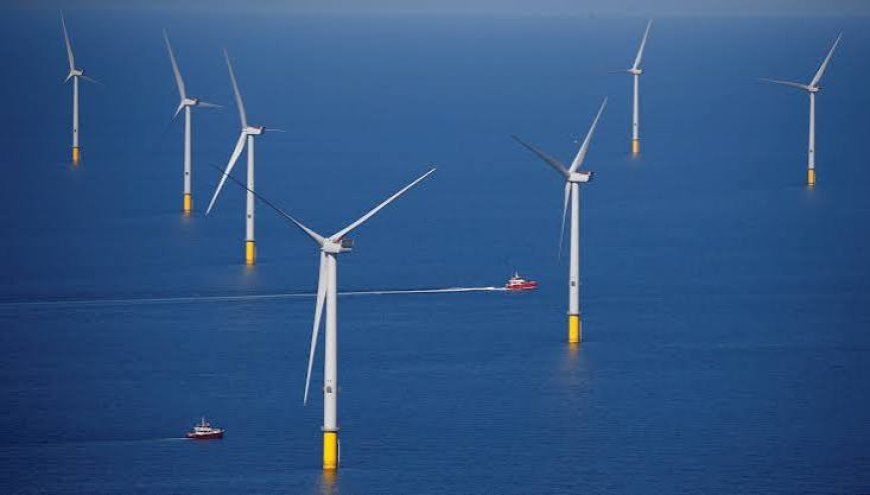
Great British Energy, the UK’s newly operational publicly owned energy investment company, has detailed its initial strategic roadmap, committing billions of pounds in public-private capital to supercharge offshore wind, expand domestic grid capacity, and accelerate regional energy transition projects.
Headquartered in Aberdeen with operational centres across the UK, the company unveiled its core investment pipeline at an industry summit in Scotland. The blueprint details how the public vehicle will deploy capital alongside private institutional investors to derisk next-generation clean technologies and dismantle long-standing infrastructure bottlenecks that have slowed renewable energy adoption.
Mobilising Capital for Floating Offshore Wind and Storage
The core focus of the newly published framework is accelerating the commercial viability of emerging green technologies, particularly floating offshore wind farms in deeper waters off the coasts of Scotland, Wales, and the South West.
While fixed-bottom offshore wind is already an established pillar of the UK energy matrix, floating turbines offer access to stronger and more consistent maritime wind resources, opening vast swathes of the seabed previously unviable for development.
Energy Security and Net Zero Secretary Ed Miliband declared that the launch of the investment roadmap marks a decisive transition from ambition to implementation in the drive toward clean power by 2030.
"For decades, the United Kingdom has been exposed to the volatile whims of international fossil fuel markets controlled by foreign petrostates," Miliband stated. "Great British Energy represents our national sovereign stake in the energy systems of tomorrow. By building homegrown clean energy here in Britain, owned by the British people, we are securing our energy independence, lowering system costs over the long run, and creating thousands of high-wage industrial jobs."
Under the initial deployment plans, GB Energy will co-fund:
- Deepwater Floating Turbines: Strategic equity injections in commercial-scale floating offshore wind testbeds.
- Grid-Scale Battery Storage: Large-capacity battery facilities designed to store surplus wind and solar generation for deployment during peak demand.
- Port Infrastructure Revitalisation: Deepwater port upgrades across industrial hubs including Teesside, Humberside, and the Moray Firth to accommodate mammoth turbine assembly vessels.
- Community Clean Power Schemes: Small-scale municipal solar and onshore wind projects that return profits directly to local councils and community trusts.
Upgrading the National Electricity Grid
A major operational priority identified in the report involves working closely with the National Grid and regional transmission operators to expedite the modernization of the country’s high-voltage electrical network.
Currently, extensive backlogs in grid connection queues mean that newly completed wind and solar installations frequently face multi-year delays before they are permitted to feed electricity into the national network. Great British Energy intends to act as an enabler, using public capital guarantees to fast-track the procurement of high-voltage subsea cables, specialized transformers, and substation infrastructure.
Energy sector analysts from the University of Edinburgh noted that resolving grid constraints is vital to preventing expensive curtailment payments—compensation paid to wind farm operators when the transmission grid lacks the capacity to transport generated electricity to population centres.
Navigating the North Sea Transition
The blueprint carefully addresses the managed transition for legacy North Sea oil and gas communities. With licensing regimes tightened and windfall taxes maintained on conventional exploration, the government faces substantial pressure from industry unions to safeguard maritime engineering expertise.
GB Energy’s investment plan directly addresses this challenge by establishing targeted "Just Transition" funding streams. These programmes are structured to retrain offshore oil and gas engineers, technicians, and divers for roles in offshore wind installation, subsea cable laying, and subsea carbon capture and storage (CCS) facilities.
Industry trade association Offshore Energies UK (OEUK) acknowledged the clarity provided by the operational roadmap, but underscored the importance of maintaining investment stability across all energy sectors during the multi-decade transition period.
"The offshore energy workforce possesses unique engineering capabilities that are essential to delivering these new technologies," a spokesperson for OEUK noted. "We welcome the state company’s focus on supply chain infrastructure, provided it works constructively with existing industry operators to protect capital investment and critical jobs."
Economic Dividends and Consumer Protection
A key ideological and economic rationale behind Great British Energy is ensuring that the financial returns generated by the UK's natural renewable resources are retained within the domestic economy, mirroring successful international models such as Norway's Equinor or Denmark's Ørsted.
Over the coming decade, dividends generated from the company's shared equity stakes in renewable developments will be reinvested into public infrastructure and targeted energy efficiency programmes for low-income households, insulating vulnerable consumers against future price shocks.
With the investment roadmap now active, the company will begin evaluating formal procurement proposals and announcing the first wave of commercial co-investment partnerships before the end of the current financial quarter.
What's Your Reaction?
 Like
0
Like
0
 Dislike
0
Dislike
0
 Love
0
Love
0
 Funny
0
Funny
0
 Angry
0
Angry
0
 Sad
0
Sad
0
 Wow
0
Wow
0