






























Bank of England Signals Cautious Path for UK Rate Cuts
The Bank of England holds borrowing costs steady while signalling a measured approach to future interest rate cuts amid persistent services inflation.

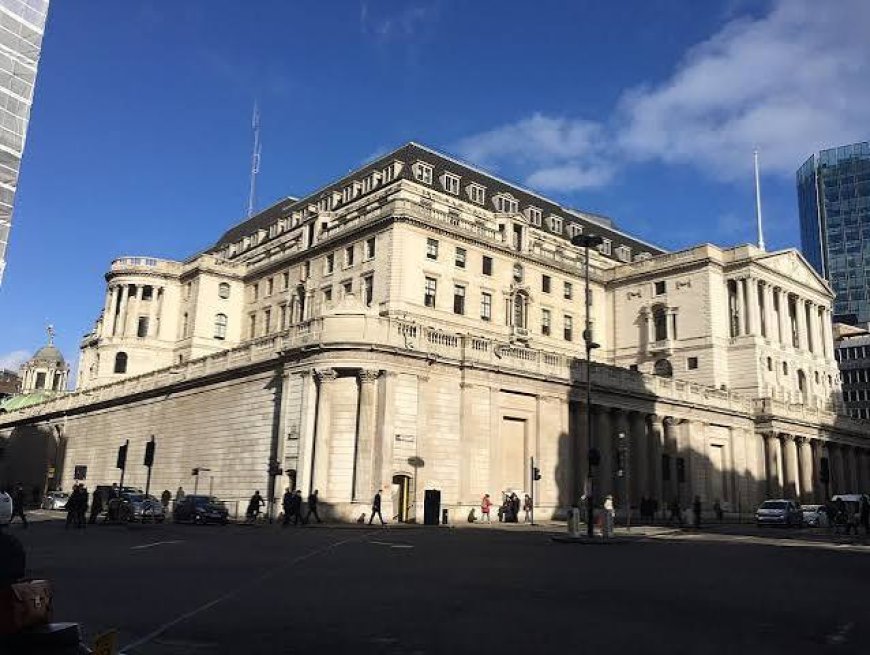
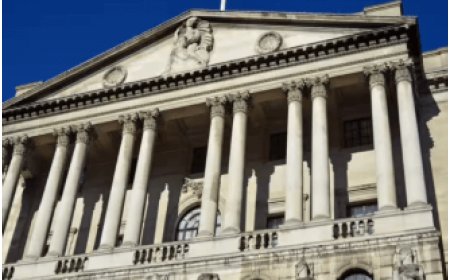
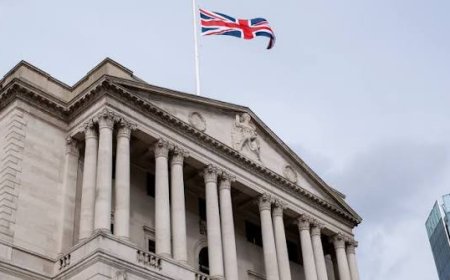
The Bank of England has reaffirmed its commitment to a gradual and vigilant strategy regarding future monetary easing, dampening market speculation of rapid reductions in benchmark borrowing costs over the coming quarters.
Following the latest assessment by the Monetary Policy Committee (MPC), policymakers underlined that while the United Kingdom’s headline inflation has cooled considerably from the double-digit peaks recorded during the height of the energy crisis, domestic inflationary dynamics remain nuanced. The primary concern for central bankers remains concentrated in the domestic services sector, where wage settlements and price adjustments continue to display stubborn persistence.
Persistent Services Inflation Weighs on Monetary Strategy
Governor Andrew Bailey, addressing financial journalists in London, stressed that the central bank’s primary obligation is to anchor price stability on a permanent basis rather than reacting to short-term fluctuations in headline numbers.
"We have seen encouraging progress across the broad economic landscape, particularly with energy and imported goods prices returning to more predictable patterns," Bailey stated. "However, the battle against embedded inflation is not yet concluded. Monetary policy must continue to do its job, remaining restrictive for long enough until the risks of inflation settling above our two per cent target have dissipated entirely."
The MPC voted by a clear majority to maintain its current stance, with internal minutes revealing a detailed debate over the transmission mechanism of past monetary tightening. Mortgage holders, businesses seeking capital refinancing, and consumer credit markets have all absorbed the steepest series of rate hikes seen in four decades. Yet, consumer demand has proved surprisingly resilient, aided in part by real wage growth turning positive as overall price rises subsided.
Analysts across the City of London point out that the resilience of the labour market has created a complex balancing act for the Old Lady of Threadneedle Street. With regular pay growth continuing to track above levels historically consistent with the 2% inflation target, the MPC remains cautious about loosening policy prematurely.
The Chancellor's Growth Agenda and Fiscal Alignment
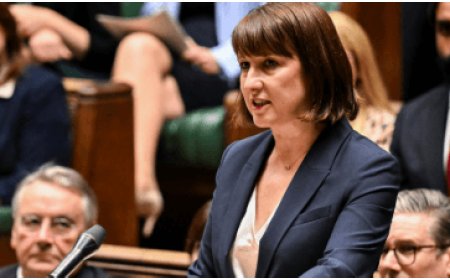
The Bank's measured posture comes at a critical juncture for HM Treasury. Chancellor of the Exchequer Rachel Reeves has positioned economic growth as the central pillar of the government’s domestic agenda, emphasizing supply-side reforms, planning deregulation, and private sector capital investment.
Treasury officials are acutely aware that high commercial borrowing costs present a headwind to business investment and infrastructure delivery. Nevertheless, Reeves has consistently respected the operational independence of the Bank of England, reiterating that stable public finances and sound fiscal rules are essential preconditions for any sustained reduction in borrowing costs.
"Economic stability is the non-negotiable foundation of our national mission to grow the economy," a Treasury spokesperson noted following the MPC announcement. "Decisions on interest rates are rightly the independent remit of the Bank of England, and the government will maintain absolute fiscal discipline to support sustainable economic conditions."
Business lobby groups, however, have expressed growing urgency for monetary relief. The British Chambers of Commerce (BCC) reported that small and medium-sized enterprises (SMEs) are increasingly feeling the cumulative strain of elevated debt-servicing obligations, alongside rising employer National Insurance contributions and elevated utility overheads.
Market Reactions and Mortgage Market Dynamics
Financial markets reacted to the announcement with modest adjustments. Sterling held firm against both the US Dollar and the Euro, while yields on UK government bonds (gilts) traded within a narrow band as traders priced in a slower cadence of rate reductions across the remainder of the year.
For the nation's homeowners, the announcement reinforces a period of structural adjustment. Hundreds of thousands of households are scheduled to exit ultra-low fixed-rate mortgage deals secured prior to 2022 over the coming twelve months. While average two-year and five-year fixed mortgage rates have drifted down from their cyclical peaks, they remain substantially higher than the sub-2% levels borrowers enjoyed over the preceding decade.
Housing market analysts suggest that while current mortgage pricing has not triggered widespread distress due to robust employment levels, it continues to constrain housing turnover and transaction volumes across London and the South East in particular.
Broader International Context
The Bank of England's measured cadence mirrors the cautious stance adopted by peer institutions, including the European Central Bank and the US Federal Reserve. Major central banks across the developed world are confronting an intricate global landscape defined by supply chain reconfiguration, volatile commodity markets, and evolving trade tariffs.
Looking ahead, economists anticipate that the MPC will continue to scrutinise upcoming monthly readings on the Consumer Prices Index (CPI), labour market turnover statistics, and the Bank’s own regional agents' reports before adjusting its stance. The consensus among institutional forecasters suggests that while the trajectory for interest rates points downward, the journey will be characterised by incremental steps rather than rapid easing.
What's Your Reaction?
 Like
0
Like
0
 Dislike
0
Dislike
0
 Love
0
Love
0
 Funny
0
Funny
0
 Angry
0
Angry
0
 Sad
0
Sad
0
 Wow
0
Wow
0