





























Met Office Unveils UK Storm Names for 2026-27 Season
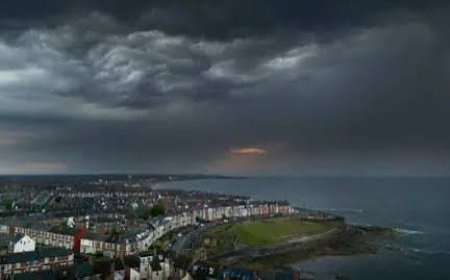
The Met Office has published its new list of storm names for the 2026-27 season, as the UK reflects on a turbulent year of severe weather.

A New Season, A New List of Names
The Met Office has today revealed the list of names that will be given to storms affecting the UK, Ireland and the Netherlands over the coming year, officially marking the start of the 2026-27 storm season. The announcement, made in partnership with Ireland's Met Éireann and the Dutch national forecaster KNMI, is now an annual fixture on the UK's weather calendar, running from the start of September through to the end of August the following year.
Storm naming was introduced by the three meteorological services a decade ago as a way of raising public awareness ahead of severe weather events, giving the public, media and emergency services a clear, memorable reference point when a significant storm is approaching. Names are assigned alphabetically, alternating between male and female names, and drawn in part from suggestions submitted by members of the public.
Reflecting on a Quieter but Still Disruptive Year
The publication of the new list comes as forecasters look back on the outgoing 2025-26 season, which by the Western Europe naming group's own measure was relatively quiet, with only a handful of storms named directly by the Met Office, Met Éireann and KNMI. However, officials have been keen to stress that a lower storm count does not necessarily mean a season without significant impact.
The season's opening storm brought exceptionally strong winds to north-western parts of the UK in early October, with gusts exceeding 90mph recorded in some exposed locations — an unusually severe reading for so early in the autumn. Later in the season, a storm disrupted travel over the Easter period, underlining how even a single, well-timed event can cause widespread inconvenience regardless of how many storms are named overall.
Beyond storms named directly by the UK, Ireland and the Netherlands, several additional storms named by other European weather services also affected the UK over the course of the year, a reminder that Britain's weather is often shaped by systems that originate, and are first named, elsewhere on the continent.
Why Storm Naming Still Matters
Since the scheme began, post-storm surveys have consistently shown that naming storms improves public awareness and encourages people to take precautionary action. Following one severe storm earlier this year, for example, the vast majority of people within the affected warning area reported being aware of the alert in advance, and most said they had taken steps such as staying indoors or adjusting travel plans as a result.
Forecasters say this improved awareness is precisely the point of the naming convention: by giving a storm a name rather than a generic weather warning, it becomes easier for people to follow updates across news outlets and social media, and easier for authorities to coordinate a consistent public safety message. The approach is credited with helping reduce the risk to life during the most severe weather events, even as climate patterns make forecasting increasingly complex.
What to Expect This Season
Meteorologists have not offered specific predictions for how many storms the new list will see used, noting that storm activity depends heavily on the position of the jet stream and other atmospheric conditions that are difficult to forecast months in advance. Nonetheless, forecasters continue to monitor developing weather systems closely throughout the autumn and winter months, when the UK typically experiences its most severe storms.
Households and businesses across the UK are being encouraged to use the start of the new storm season as a prompt to review their own preparedness, from checking flood risk in their local area to ensuring they are signed up for severe weather alerts. With the Environment Agency and Met Office continuing to develop their early warning systems, officials say the coming season offers an opportunity to build on the public awareness gains of previous years.
As the new list of names is released, all that is left now is to wait and see which of them will end up attached to the storms that shape Britain's weather over the months ahead.
What's Your Reaction?
 Like
0
Like
0
 Dislike
0
Dislike
0
 Love
0
Love
0
 Funny
0
Funny
0
 Angry
0
Angry
0
 Sad
0
Sad
0
 Wow
0
Wow
0