
































NHS Launches National AI Diagnostic Network for Cancer
The NHS begins a nationwide deployment of clinical AI diagnostic tools across hospital trusts to speed up cancer detection and reduce clinical backlogs.

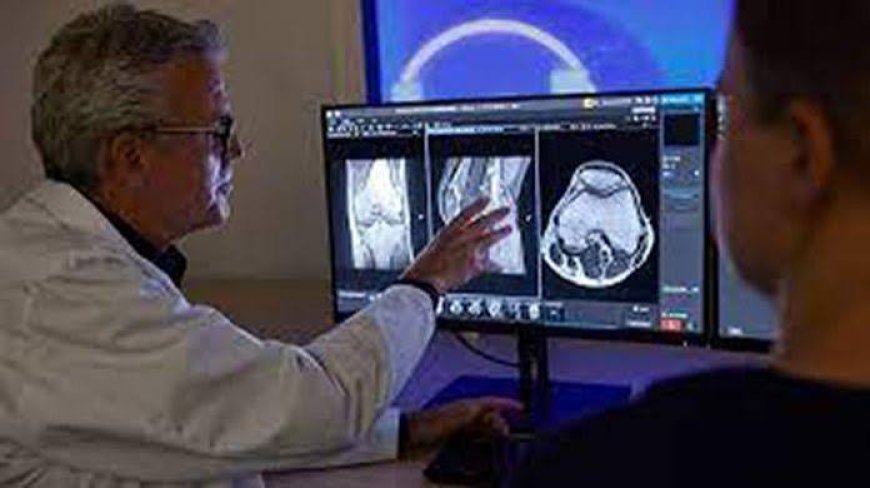
The National Health Service has initiated a major technological rollout across hospital trusts in England, integrating advanced artificial intelligence diagnostic software directly into standard radiology and clinical screening workflows.
The initiative represents one of the most ambitious systemic deployments of medical AI in any national public healthcare system. The programme is targeted at reducing elective care waiting lists, addressing acute workforce shortages in diagnostic imaging, and identifying early-stage malignancies—particularly in lung, breast, and colorectal cases—before symptoms manifest clinically.
Transforming Radiology and Diagnostics at Scale
Under the newly deployed system, secure cloud-based AI algorithms will analyze diagnostic scans, including CT scans, MRIs, and digital X-rays, alongside hospital medical teams. The technology acts as a high-precision triage layer, flagging urgent abnormalities in real time and prioritizing high-risk patient scans at the top of radiologists' reporting queues.
During regional trials across several pilot trusts in Greater Manchester, Yorkshire, and London, the software demonstrated an ability to reduce the average turnaround time for emergency and outpatient chest X-ray interpretations from several days to under an hour. In screening programmes, the algorithm identified subtle structural micro-calcifications that might otherwise require secondary multi-specialist reviews.
Health and Social Care Secretary Wes Streeting hailed the national rollout as an essential transition toward a modern, preventive healthcare model.
"The NHS is entering a new era where cutting-edge technology works hand-in-hand with our world-class clinical staff," Streeting stated during a visit to a newly digitized diagnostic hub. "For too long, outdated IT systems and manual administrative bottlenecks have held back clinical teams and left patients waiting in agonizing uncertainty. By deploying proven, secure AI across the country, we are detecting deadly diseases earlier, saving lives, and delivering real value for taxpayers."
Tackling Waiting Lists and Workforce Bottlenecks
The Royal College of Radiologists (RCR) has long warned of persistent staffing deficits within the UK’s diagnostic workforce. The demand for medical imaging has escalated dramatically over the last decade, driven by an aging demographic and complex multimorbid conditions, outpacing the supply of newly trained consultant radiologists.
Medical leadership has clarified that the deployment of AI is not intended to replace doctors, but rather to augment clinical capacity and eliminate administrative friction.
Dr. Katherine Hall, a consultant radiologist and clinical advisor to the digital rollout, emphasised the collaborative nature of the technology. "This is not about handing clinical decision-making over to an automated system," Dr. Hall explained. "It is about giving clinicians an exceptionally sharp second pair of eyes that works instantly. By automating the preliminary sorting and identifying normal scans rapidly, clinicians can dedicate their focused expertise to complex, high-risk cases that require immediate intervention."
The Department of Health confirmed that all algorithms utilized in the rollout have undergone rigorous certification under the Medicines and Healthcare products Regulatory Agency (MHRA) and conform to strict data privacy frameworks established by NHS Transformation Directorates. Patient records and medical images remain hosted within sovereign, encrypted data centres, with patient data anonymized and excluded from third-party commercial training sets without explicit consent.
Expanding Beyond Hospital Walls into Primary Care
The national diagnostic programme is not confined exclusively to large acute hospital trusts. Community Diagnostic Centres (CDCs)—located in repurposed retail spaces, regional transport hubs, and high-street clinics—are also receiving the software upgrades.
By placing AI-enabled diagnostic imaging tools directly in community settings, general practitioners (GPs) can refer patients for rapid local scans without requiring hospital admissions. Early diagnostic data suggests that diverting routine imaging to CDCs alleviates emergency department overcrowding while improving five-year survival rates for aggressive cancers through early detection.
Patient advocacy organizations have largely welcomed the development, noting that speed of diagnosis is often the most critical determinant of clinical outcomes and patient mental wellbeing.
"When you are suspected of having a serious condition like cancer, every single day spent waiting for a scan result causes immense psychological distress," said a representative from Cancer Research UK. "Equipping our NHS staff with reliable diagnostic technologies to accelerate that process safely is a necessary step forward."
Future Milestones for NHS Digital Reform
The national AI imaging rollout serves as the initial phase of a broader ten-year digital modernization plan for the health service. Subsequent phases are scheduled to integrate predictive analytics into intensive care units to anticipate patient deterioration, deploy automated administrative scheduling to reduce missed outpatient appointments, and streamline cross-trust electronic patient records.
As the implementation expands across all English integrated care systems (ICS), health economists will track clinical accuracy rates, waiting time reductions, and overall cost efficiencies, establishing a template that could soon be mirrored by devolved healthcare administrations in Scotland, Wales, and Northern Ireland.
What's Your Reaction?
 Like
0
Like
0
 Dislike
0
Dislike
0
 Love
0
Love
0
 Funny
0
Funny
0
 Angry
0
Angry
0
 Sad
0
Sad
0
 Wow
0
Wow
0