




























FTSE 100 Today: Mining Stocks Drag Despite UK GDP Growth
The FTSE 100 fell on Thursday even as UK GDP beat forecasts, with mining giants Antofagasta and Rio Tinto leading a sharp sell-off in commodities.

Growth Beats Forecasts, but the Market Doesn't Care
Britain's economy grew faster than expected in the second quarter of 2026, yet London's flagship stock index fell anyway on Thursday, in a reminder of how disconnected the FTSE 100 can be from the domestic economic story it is supposed to reflect.
Official figures showed the UK economy expanded by 0.4% in the second quarter, in line with economists' forecasts, while monthly growth for June came in stronger than expected at 0.3%. On paper, that ought to have been welcome news for a government under pressure over living standards and public finances. Futures markets had briefly pointed to a positive opening for the FTSE 100, with traders anticipating a rebound after three straight sessions of losses.
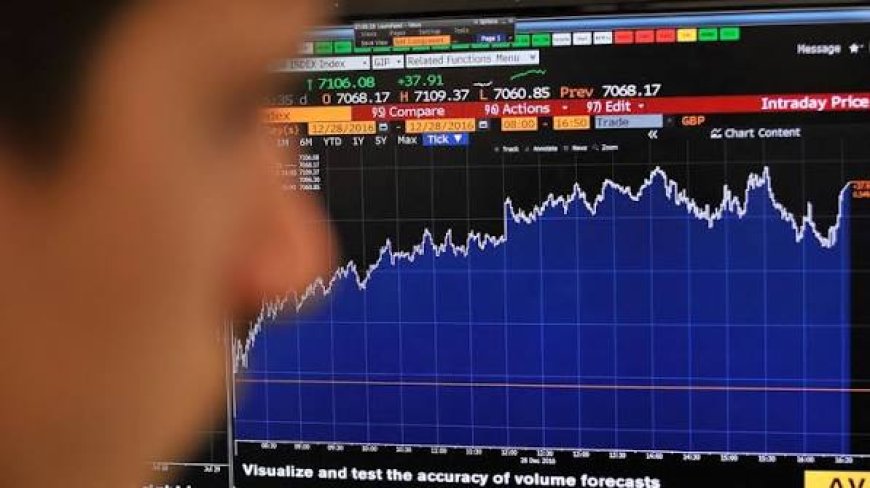
Instead, the index slipped again, falling roughly a quarter of a percent to trade around the 10,800 mark by midday — its fourth consecutive losing session — even as European rivals in Paris and Frankfurt made modest gains.
Miners Bear the Brunt of the Sell-Off
The culprit was not the domestic economy but the resource sector, which carries outsized weight on the London market. Mining giants suffered heavy losses as metal prices retreated from recent highs, unwinding some of the sector's strong run over the past fortnight.
Copper-focused miner Antofagasta was the session's worst performer, sliding around 5% after the Chilean group revised down its full-year copper production guidance, citing weather-related disruption at its operations. Rio Tinto and Anglo American both fell more than 4%, while precious-metals miners Fresnillo and Endeavour Mining each dropped over 3% as gold and silver prices cooled from recent record levels.
The declines followed an unusually strong run for the sector, with copper prices on the London Metal Exchange having pushed above $14,200 a tonne only last week. Analysts described the pullback as a natural correction after such rapid gains, rather than a sign of a deeper structural problem in commodities markets.
Adding to the drag, several of the FTSE 100's largest constituents traded without entitlement to their next dividend payment on Thursday — a routine "ex-dividend" adjustment that mechanically reduces a stock's price and, in turn, weighs on the wider index on days when a cluster of large firms go ex-dividend simultaneously.
Geopolitics Adds to the Uncertainty
Beyond the mining sell-off, investor sentiment has also been shaped by lingering tension in the Middle East, where disruption around the Strait of Hormuz has kept energy markets on edge for much of the year. Oil majors Shell and BP both edged lower on the day, tracking softer crude prices, even as the wider market weighed the risk of renewed volatility if tensions escalate further.
Sterling was little moved on the day, trading close to $1.35 against the dollar, as investors continued digesting the previous day's US inflation data and weighed its implications for the pace of interest-rate cuts on both sides of the Atlantic.
What It Means for Interest Rates
The stronger growth figures are unlikely to change the Bank of England's near-term thinking. The Monetary Policy Committee held interest rates at 3.75% at its last meeting, in a split vote, with policymakers flagging that inflation — running at 2.6% in June — could climb toward the 3% mark later in the year due to higher energy costs linked to the conflict in the Middle East.
Economists say Thursday's growth data, while encouraging, is unlikely on its own to prompt either an early rate cut or a surprise hike when the Bank next meets in September. Instead, attention will remain fixed on how far energy prices rise, and whether the recent resilience in growth can be sustained if borrowing costs stay elevated for longer than households and businesses had hoped.
Bright Spots Amid the Gloom
Not every stock fell. Entain, the gambling group behind Ladbrokes and Coral, posted stronger-than-expected operating profits and reaffirmed its full-year guidance, sending its shares higher. Investment trust Scottish Mortgage and insurer Aviva also finished among the day's better performers, offering some balance to an otherwise mining-dominated story.
For now, London's blue-chip index remains a tale of two economies: a domestic picture that is, cautiously, improving, and a resource-heavy index whose fortunes are increasingly tied to global commodity swings far beyond Britain's shores.
Next Article
What's Your Reaction?
 Like
0
Like
0
 Dislike
0
Dislike
0
 Love
0
Love
0
 Funny
0
Funny
0
 Angry
0
Angry
0
 Sad
0
Sad
0
 Wow
0
Wow
0