




























Manchester Airports Hack: Stolen Data Released by Attackers
Hackers behind the Manchester Airports Group cyberattack have published stolen customer data online after a ransom was refused, raising fresh fears over phishing and fraud.

A Ransom Refused, and Data Released
The operators of Britain's largest regional airport group are facing renewed scrutiny after the criminal group behind a cyberattack on Manchester Airports Group published a substantial cache of stolen customer data online, following the company's refusal to pay a ransom demand.
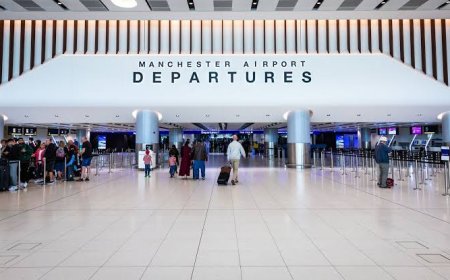
Manchester Airports Group, which owns Manchester Airport, London Stansted and East Midlands Airport, first alerted the public to the breach in late August, confirming that attackers had accessed systems linked to car park bookings, airport lounge reservations, Fast Track security passes and Wi-Fi sign-ups across its three sites. At the time, the company said it had refused to engage with the ransom demand, a decision that appears to have prompted the group responsible, identified by researchers as FulcrumSec, to make good on its threat to release the data.
Scale of the Leak
Security researchers say the published files amount to roughly 550 gigabytes of data once extracted, a volume that points to a far more extensive breach than initially suggested. The exposed information reportedly includes booking histories, travel dates, vehicle registration details, purchase references and customer profile data drawn from car park, lounge and Wi-Fi systems across the group's airports.
David Sancho, a senior threat researcher at cybersecurity firm TrendAI, described the scale of the exposure as a major escalation. He said the type of data involved, spanning travel dates, vehicle details and customer profiles, was precisely the kind of information criminals use to build highly credible, targeted phishing and social engineering campaigns, rather than a simple contact list breach.
Why This Data Matters to Fraudsters
Unlike breaches involving only email addresses or basic contact details, the information leaked from Manchester Airports Group's systems could allow criminals to craft convincing scam messages referencing real travel dates, specific bookings and vehicle information, making fraudulent emails or texts significantly harder for victims to identify as fake. Security professionals note that this kind of "context-rich" data is increasingly prized by cybercriminal groups, who can use artificial intelligence tools to rapidly generate personalised phishing content at scale.
Passengers who used car parking, lounge access, Fast Track security lanes or free Wi-Fi at Manchester, Stansted or East Midlands airports around the time of the breach are being urged to remain vigilant for suspicious communications, particularly messages that reference genuine booking or travel details in an apparent bid to appear legitimate.
Company Response and Wider Context
Manchester Airports Group has not detailed the full extent of the exposure since the data was published, though the incident adds to a growing list of high-profile cyberattacks affecting British consumer-facing businesses in recent years. The aviation and travel sector in particular has become an attractive target for ransomware groups, given the volume of sensitive personal and financial data typically held by airports, airlines and related travel services.
The breach follows a string of significant cyber incidents affecting UK organisations, including attacks that disrupted production at a major British car manufacturer and separate incidents affecting government departments and retailers. Cybersecurity experts have repeatedly pointed to a pattern in which attackers increasingly favour data theft and public exposure over simply encrypting systems, calculating that the reputational damage and regulatory risk of a public leak can be just as effective a lever for extortion as disrupting operations.
What Happens Next
Regulators are expected to examine the circumstances of the breach closely, with the Information Commissioner's Office empowered to investigate whether the airport group had adequate safeguards in place to protect customer data. Companies found to have failed in their data protection obligations can face significant financial penalties under UK law, in addition to reputational damage and potential legal claims from affected customers.
For passengers, the advice from cybersecurity experts is consistent: treat unsolicited emails, texts or calls referencing recent airport bookings with caution, avoid clicking on links in unexpected messages, and verify any communication directly through official airport or airline channels before sharing further personal or payment information. As investigations continue, the incident serves as a stark reminder of the value criminal groups now place on detailed personal data, and the lengths some will go to in order to monetise it once a ransom is refused.
What's Your Reaction?
 Like
0
Like
0
 Dislike
0
Dislike
0
 Love
0
Love
0
 Funny
0
Funny
0
 Angry
0
Angry
0
 Sad
0
Sad
0
 Wow
0
Wow
0