





























UK Inflation Rises to 3.1% Ahead of October Budget
UK inflation climbed to 3.1% in August, its highest in five months, complicating Chancellor John Healey's run-up to the 28 October Budget.


Prices Rise Faster Than Expected
Britain's cost-of-living squeeze has tightened again after official figures showed inflation climbing to 3.1% in August, up from 2.9% the previous month and the highest reading in five months. The Consumer Prices Index increase was driven largely by higher costs at the petrol pump, pricier diesel and a jump in air fares, with analysts pointing to the knock-on effects of elevated global oil prices.
Underlying price pressures told a slightly calmer story. Core inflation, which strips out volatile food, energy, alcohol and tobacco costs, held at 2.6%, while services inflation, closely watched by the Bank of England for signs of embedded price growth, came in at 3.4%. Economists said the steadiness of those two measures offered policymakers some reassurance even as headline inflation drifted further above the Bank's 2% target.
Markets Steady Themselves Before Two Big Decisions
The inflation data landed in the middle of a nervy week for UK financial markets. The FTSE 100 had slipped on Tuesday as rising oil prices and climbing bond yields weighed on sentiment, before rebounding on Wednesday to trade above 10,680 points as crude prices eased back from recent highs. Brent crude, which had spiked on disruption linked to the conflict in the Middle East, pulled back slightly after Saudi Arabia signalled it could raise supply and US inventory data came in stronger than forecast.
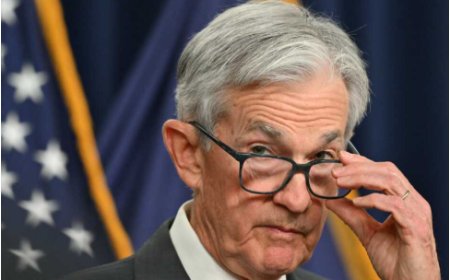
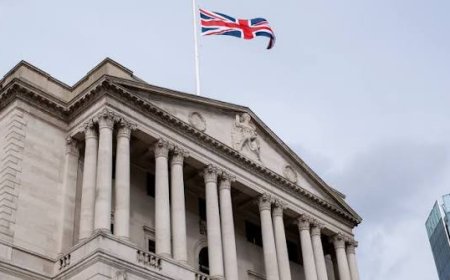
Traders were watching two central bank decisions in tandem. Across the Atlantic, markets were pricing in a strong likelihood that the US Federal Reserve would raise interest rates by a quarter point, with investors also parsing comments from the Fed chair for hints on the path ahead. Closer to home, the Bank of England's own policy meeting looms, with its base rate currently sitting at 3.75%. Because core and services inflation stayed roughly stable, most economists do not expect an immediate move from Threadneedle Street, though the rise in headline inflation narrows the central bank's room for manoeuvre.
Banking stocks including Barclays and Standard Chartered posted early gains on Wednesday, while mining shares benefited from firmer metals prices. Energy stocks remain the swing factor: further falls in oil prices would ease inflation worries, but a renewed spike could reignite concern about both price growth and the broader economic outlook.
A Fragile Recovery, But a Recovery Nonetheless
The inflation reading arrived alongside newer figures showing the UK economy grew by 0.4% in the three months to July, a result that surprised many forecasters who had expected weaker output. The services sector supplied the bulk of that growth, expanding by 0.6%, with the strongest contribution coming from information and communication businesses. Statisticians noted that many of the firms reporting the largest revenue increases in July were tied to artificial intelligence and cloud computing work, underlining how quickly that sector has become a driver of measured UK output.
Not every part of the economy shared in the gains. Production output fell by 0.5% over the same period, and construction activity dipped by 0.5% too, even though manufacturing itself grew modestly. The labour market, meanwhile, showed signs of cooling: unemployment held at 4.9%, the number of people on payrolls was around 101,000 lower than a year earlier, and vacancies fell by a further 8,000 to sit near five-year lows.
Wage growth has slowed sharply in the private sector, up just 2.9% in the three months to July, its weakest pace since October 2020, compared with 6.3% growth in public-sector pay. Overall average earnings, including bonuses, rose 3.9%. With inflation now outpacing private-sector pay growth, households reliant on wages outside the public sector may start to feel renewed pressure on their real incomes even as the headline economic growth figures look encouraging.
What It Means for the October Budget
All of this sets an awkward backdrop for Chancellor John Healey, who is due to deliver his first Budget on 28 October. Healey has pledged to stick to the fiscal rules he inherited, including a commitment to balance day-to-day spending with tax revenue by the end of the decade, while Prime Minister Andy Burnham's government has signalled ambitions in housing, social care and defence spending that will need to be paid for.
A stronger-than-expected growth number gives the Treasury some breathing room, but rising inflation and softening private wage growth complicate the political calculus around any tax changes. Business groups have said uncertainty ahead of the Budget is already affecting hiring and investment decisions, while graduate recruitment has fallen for a fifth consecutive year among the country's largest employers.
With just over six weeks until Healey sets out his tax and spending plans, the coming weeks of economic data — including the Bank of England's next rate decision — will shape how much room the Chancellor has to manoeuvre, and how the public reacts to whatever choices he ultimately makes.
What's Your Reaction?
 Like
0
Like
0
 Dislike
0
Dislike
0
 Love
0
Love
0
 Funny
0
Funny
0
 Angry
0
Angry
0
 Sad
0
Sad
0
 Wow
0
Wow
0