






























NATS Prestwick Fault Sparks New UK Flight Chaos
A fresh technical failure at NATS' Prestwick centre disrupted flights across Scotland, Northern Ireland and northern England, just 13 days after a nationwide outage.

Passengers across Scotland, Northern Ireland and northern England faced fresh travel disruption this week after Britain's air traffic control provider, NATS, suffered its second significant technical failure in under a fortnight a repeat breakdown that has intensified pressure on the organisation and reopened questions about the fragility of the UK's aviation infrastructure.
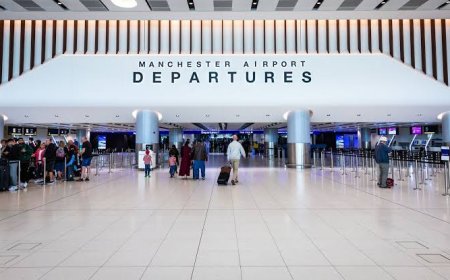
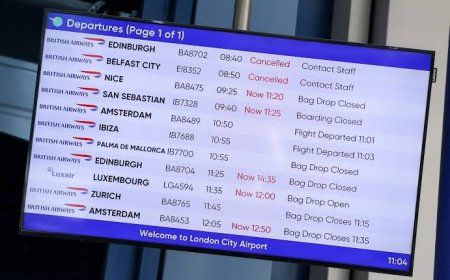
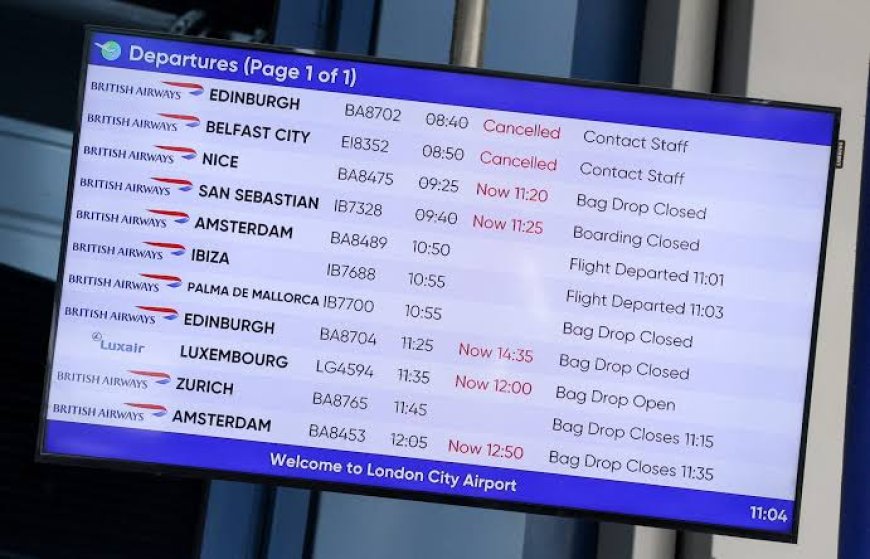
The latest problem struck on Monday at NATS' control centre in Prestwick, Scotland, which manages large stretches of airspace covering Scotland, Northern Ireland and the north of England. Engineers identified a network connectivity issue that reduced the number of aircraft controllers could safely manage at any one time, forcing NATS to impose temporary traffic restrictions while the fault was investigated and resolved. The knock-on effect rippled through the day, with delays and cancellations reported at Manchester, Edinburgh, Glasgow, Aberdeen, Belfast City and Belfast International airports, as well as at some domestic services further south, including reports of disruption at Bristol.
NATS has been at pains to stress that Monday's fault was unrelated to a separate, more serious incident that occurred on 8 September, when a software defect in the system responsible for processing flight data forced restrictions that ultimately led to more than 2,000 cancelled flights and days of recovery disruption for hundreds of thousands of passengers. That earlier failure prompted NATS to publish a preliminary report describing the fault and the safety measures taken to restart systems and reload flight data. Whatever the technical distinction between the two incidents, the timing barely two weeks apart has done little to reassure an aviation industry already frustrated by repeated system failures.
Airlines were quick to voice their displeasure. EasyJet said the fresh breakdown again called into question the resilience of NATS' systems, while British Airways described a second major fault so soon after the first as disappointing. The sharpest criticism came from Ryanair, which renewed its long-standing demand for NATS chief executive Martin Rolfe to resign, accusing the organisation of failing to provide either a sufficiently robust primary system or an effective backup capable of preventing cascading disruption.
For passengers, the practical consequences were familiar: long queues at check-in desks, uncertainty over whether flights would depart on time, and last-minute rebookings as airlines scrambled to manage reduced capacity in the affected airspace. Travel industry figures have urged anyone flying through the affected region to check their flight status directly with their airline before heading to the airport, and to allow extra time for potential delays at the terminal.
The Civil Aviation Authority has indicated that Monday's Prestwick-centre disruption is likely to be classified as "extraordinary circumstances" for the purposes of passenger compensation rules a designation that, if confirmed, would mean airlines are not automatically liable to pay the standard compensation owed for delays caused by circumstances within their control. That determination is likely to frustrate passenger rights campaigners, who argue that repeated infrastructure failures should not be treated as unforeseeable events given how frequently they now appear to be occurring.
Beyond the immediate inconvenience, the back-to-back incidents have reignited a broader debate about underinvestment in the systems that underpin one of the world's busiest and most complex airspaces. NATS manages traffic not only for domestic UK flights but for a significant share of transatlantic and European air corridors, meaning failures at its centres can have consequences that extend well beyond British shores. Industry analysts have pointed out that the organisation has faced criticism before over ageing infrastructure and the pace of modernisation, and that Monday's fault however technically distinct from the September 8 outage will likely add fuel to calls for an independent review of NATS' resilience and contingency planning.
Government officials have so far offered measured responses, acknowledging the frustration felt by passengers and airlines alike while stopping short of committing to any immediate structural changes at NATS. With the busy autumn half-term travel period approaching, however, pressure is likely to build on both the organisation and ministers to demonstrate that lessons have genuinely been learned and that a third disruption in quick succession does not follow.
What's Your Reaction?
 Like
0
Like
0
 Dislike
0
Dislike
0
 Love
0
Love
0
 Funny
0
Funny
0
 Angry
0
Angry
0
 Sad
0
Sad
0
 Wow
0
Wow
0