



























UK Retail Sales Rise 0.5% in August Despite Inflation
UK retail sales rose 0.5% in August, beating forecasts as consumers increased spending despite higher fuel prices and persistent inflation.


British shoppers keep spending despite economic pressure
British consumers increased their spending in August, delivering an unexpected boost to the UK economy and challenging expectations that households would become more cautious as inflation and fuel costs remained elevated.
Official figures showed that UK retail sales volumes rose 0.5% between July and August, while economists surveyed by Reuters had expected a fall of 0.2%. Compared with August 2025, sales volumes were 2.4% higher.
The increase provides another indication that consumer demand has remained relatively resilient despite a difficult economic backdrop.
Fuel spending tells a different story
Not every part of the retail economy benefited from the increase.
Fuel sales fell during August as motorists faced higher prices following renewed disruption connected with the conflict in the Middle East. That decline highlights the pressure being placed on household budgets by rising energy and transport costs.
Consumers therefore appear to have adjusted where they spend rather than simply reducing expenditure across the board.
The overall increase in retail volumes suggests that spending in other parts of the economy was strong enough to offset the reduction in fuel purchases.
That distinction is important for businesses and policymakers because consumer spending remains a major component of economic activity.
A closely watched signal for the Bank of England
The retail figures arrive at a particularly important moment for monetary policy.
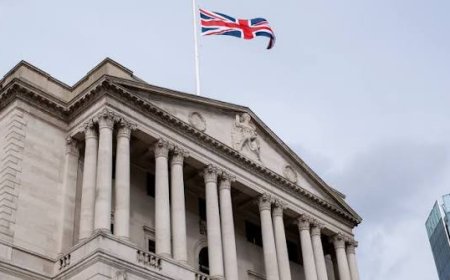
The Bank of England is attempting to balance persistent inflation against the need to support economic activity. Stronger-than-expected consumer demand can complicate that task because sustained spending can contribute to continued price pressure.
The latest figures could therefore strengthen expectations that interest rates may need to remain restrictive for longer.
Sterling edged higher after the data were released, reflecting the market's response to the stronger-than-expected economic numbers.
The significance of the figures is not that they eliminate concerns about the UK economy. Instead, they suggest that households have so far been more willing to spend than some forecasts had anticipated.
Inflation remains a major concern
The stronger retail performance comes against a backdrop of elevated inflation.
Higher prices have already changed consumer behaviour, with households facing increased costs for essentials, energy and transport. The fact that retail volumes increased despite those pressures could indicate that some consumers remain financially capable of maintaining spending.
However, economists and market participants continue to watch whether inflation will eventually force households to cut back.
Higher fuel costs are particularly important because they can affect more than motorists. Increased transportation costs can eventually feed into the prices of goods and services throughout the economy.
That creates a potential challenge for policymakers attempting to prevent temporary price pressures from becoming more persistent.
What the figures mean for British businesses
For retailers, the August figures offer a positive signal heading into the autumn trading period.
Higher sales volumes can support revenue, employment and investment, although the benefits will not be evenly distributed across the sector.
Retailers are still operating in an environment where consumers are sensitive to prices and where operating costs remain significant.
The figures also demonstrate why monthly economic data can be difficult to interpret in isolation. A single month of stronger sales does not necessarily establish a long-term change in consumer behaviour.
Instead, economists will be looking at whether the improvement continues over the coming months.
A resilient consumer economy
The latest numbers add to a series of indicators suggesting that parts of the British economy have shown more resilience than expected during 2026.
At the same time, inflation, energy prices and interest rates continue to create uncertainty.
For the Bank of England, the central question is whether stronger consumer activity represents sustainable economic momentum or a temporary improvement before higher prices begin to weigh more heavily on households.
For consumers and retailers, the answer will become clearer as autumn spending data emerge.
For now, however, UK retail sales have provided an unexpected positive signal, with British shoppers continuing to spend despite an increasingly challenging cost environment.
What's Your Reaction?
 Like
0
Like
0
 Dislike
0
Dislike
0
 Love
0
Love
0
 Funny
0
Funny
0
 Angry
0
Angry
0
 Sad
0
Sad
0
 Wow
0
Wow
0