


























UK to Refuel Saudi Jets Amid Houthi Escalation
PM Andy Burnham confirms Britain will provide defensive air-to-air refuelling for Saudi jets after a Houthi strike on Riyadh marks a dangerous new escalation.

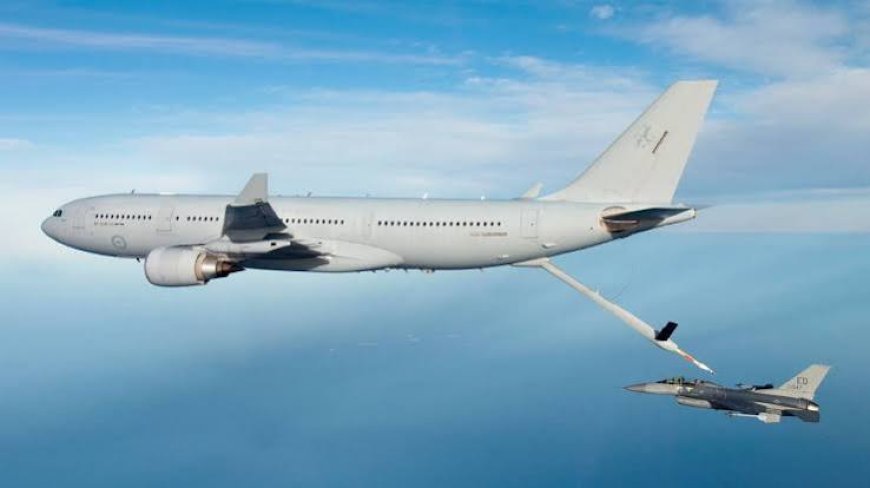
Britain has stepped further into the widening confrontation between Saudi Arabia and Yemen's Houthi movement, with Prime Minister Andy Burnham confirming that the Royal Air Force will begin providing defensive air-to-air refuelling for Saudi fighter jets in the coming days.
Speaking to journalists while travelling to the United Nations General Assembly in New York, Burnham said the decision followed consultations with Defence Secretary Wes Streeting and Foreign Secretary Ed Miliband. He framed the move as necessary to safeguard both British and regional interests, pointing to the risk that continued instability could disrupt vital oil shipping routes and add further strain to household energy bills already stretched by months of Middle East turmoil.
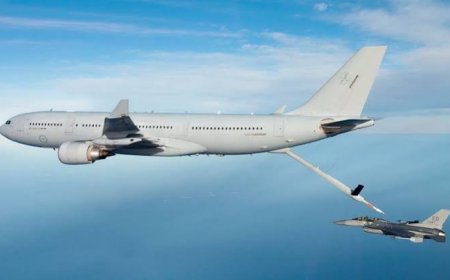
The support package is deliberately narrow in scope. A single RAF Voyager tanker aircraft will refuel Saudi jets carrying out defensive operations against incoming drones and missiles, rather than supporting any offensive strikes on Houthi positions inside Yemen. Officials say the arrangement sits alongside the UK's Sky Sabre air defence battery, which has already been stationed in Saudi Arabia for some time. The mission is expected to run for a matter of weeks and will be kept under continuous review, according to Downing Street.
The trigger for Britain's involvement was a Houthi missile and drone barrage aimed at Riyadh at the weekend — the first assault on the Saudi capital itself in several years and a marked escalation after a period of relative restraint. Saudi air defences intercepted the attack, but the episode rattled markets and revived fears of a broader regional conflagration. It came only weeks after Houthi fighters, who already controlled much of Yemen's populated interior, launched a rapid offensive to seize the country's entire Red Sea coastline, handing them effective control over shipping lanes through the Bab al-Mandeb Strait — one of the world's most strategically sensitive waterways.
For Burnham, the decision represents one of the most consequential foreign policy calls of his brief premiership. He took office in July and has so far focused heavily on domestic priorities, including the cost of living and public services. Monday's announcement signals a willingness to engage more directly in Middle Eastern security matters, even as his government faces mounting pressure at home over the economy.
Britain and Saudi Arabia have a long-standing defence relationship, with the UK ranking among the kingdom's largest arms suppliers for decades. That history has made the refuelling agreement a natural extension of existing ties, though it is likely to draw scrutiny from MPs concerned about the UK's exposure to a conflict with no clear end in sight. Critics of the wider Yemen war have long argued that Western backing for the Saudi-led coalition risks entangling Britain in a humanitarian crisis that has already devastated large parts of Yemen.
Government sources insist the UK's role remains strictly defensive and will not extend to intelligence-sharing for targeting purposes inside Yemen. Even so, opposition figures are expected to press ministers for greater transparency on the rules of engagement and the criteria that would trigger an extension — or an end — to the mission.
Burnham's trip to New York, where he is due to meet US President Donald Trump on the sidelines of the UN gathering, is likely to be dominated by discussion of the deteriorating security picture in the Gulf and Red Sea. Analysts say the Houthi offensive along Yemen's coast has already begun reshaping global shipping patterns, with some carriers rerouting vessels away from the Red Sea entirely, pushing up freight costs and lengthening delivery times for goods bound for European ports, including those in Britain.
Energy markets have so far reacted with caution rather than alarm, though traders are watching closely for signs that the conflict could spread to threaten Saudi oil export infrastructure directly. Any disruption to Saudi crude flows would have immediate knock-on effects for UK fuel prices, which remain a politically sensitive issue for a government already grappling with above-target inflation.
Downing Street has not ruled out further military support if the situation deteriorates, though officials stressed that any escalation beyond the current refuelling mission would require a fresh decision and, likely, a statement to Parliament. For now, the government's message is one of measured, limited engagement — a balancing act between reassuring an important ally and avoiding deeper entanglement in a conflict that has defied easy resolution for more than a decade.
What's Your Reaction?
 Like
0
Like
0
 Dislike
0
Dislike
0
 Love
0
Love
0
 Funny
0
Funny
0
 Angry
0
Angry
0
 Sad
0
Sad
0
 Wow
0
Wow
0