






























UK Sanctions Israeli Settlements in Foreign Policy Reset
Foreign Secretary Ed Miliband confirms sweeping trade restrictions on West Bank settlement goods as the UK toughens its stance on Israel under PM Andy Burnham.

Britain Draws a Line Under Old Israel Policy
The UK government has confirmed it will roll out a significant package of economic measures targeting Israeli settlements in the occupied West Bank, marking one of the most consequential foreign policy shifts since Prime Minister Andy Burnham took office in July.
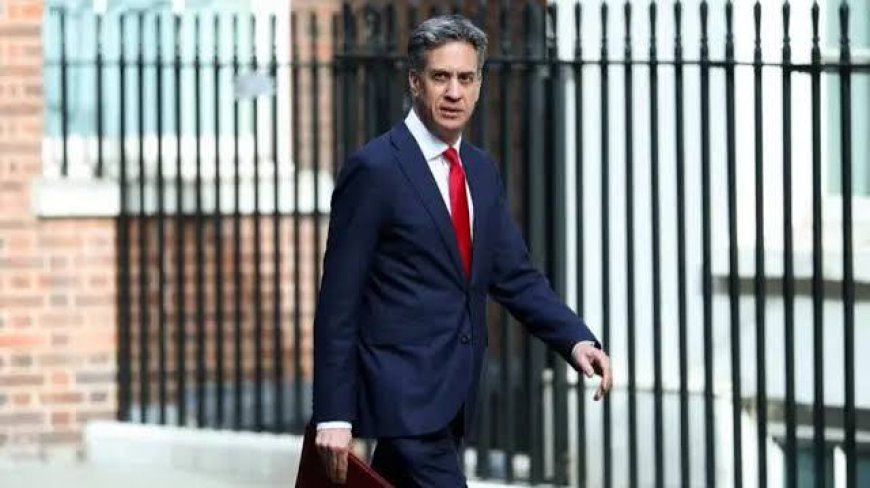
Foreign Secretary Ed Miliband addressed MPs in the House of Commons on Tuesday, telling lawmakers that Britain requires "a comprehensive reset of our policy" when it comes to the West Bank. It was his first full question-and-answer session with Parliament since the new government was sworn in, and frustration among backbenchers over Britain's muted response to continued settlement expansion had clearly been building.
What the New Measures Involve
According to Miliband, the centrepiece of the reset is a ban on goods produced within settlements considered illegal under international law, alongside targeted sanctions aimed at British institutions and individuals found to be financing, constructing, or advertising new settlement developments.
"We do not want British companies financing, constructing or advertising new settlements," Miliband told the chamber. "The work we are now undertaking is how we can stop that."
He added that ministers are also examining the broader economic relationship between the UK and the occupied territories, suggesting further measures could follow in the coming weeks.
The announcement builds on warnings Miliband issued last month, after Israel's Land Authority opened bidding for more than 1,200 homes in the E1 area near Ma'ale Adumim — a development widely seen as one that would fragment the West Bank and undermine the viability of a future Palestinian state.
Backdrop of Rising Tension
The reset does not emerge in isolation. Israel has built roughly 160 settlements across the West Bank and East Jerusalem since occupying the territory in 1967, now housing around 700,000 settlers alongside an estimated 3.3 million Palestinians. Under international law, these settlements are considered illegal, a position long held by successive UK governments — but rarely accompanied by concrete economic consequences until now.
Burnham, who succeeded Keir Starmer as Labour leader and Prime Minister this summer, spoke to US President Donald Trump by phone on Monday, where the pair discussed the Middle East and the importance of a two-state solution. It remains unclear from official accounts whether Burnham briefed Trump directly on the sanctions plan ahead of Tuesday's Commons statement.
International Reaction
The response from Israel was swift and pointed. Foreign Minister Gideon Saar dismissed the move as "absurd," arguing it was inappropriate for Britain to "lecture the Jewish people about where they may live in their historic tiny homeland." He went further, warning that the decision to damage bilateral relations was "deeply unfortunate" and hinted at potential retaliation.
Washington's discomfort has also been made plain. The US ambassador to Israel suggested British firms could face restrictions on doing business in parts of the United States if London presses ahead, framing the sanctions as carrying a "huge economic impact" for UK companies operating internationally.
Within Israel's own governing coalition, the reaction escalated further still. Hard-line National Security Minister Itamar Ben-Gvir called on Prime Minister Benjamin Netanyahu to formally recognise the Falkland Islands as Argentine territory, accusing Britain of hypocrisy over its own overseas territories — a remark likely designed to generate headlines as much as diplomatic pressure.
Domestic Political Stakes
For Burnham's fledgling government, the announcement carries real risk. Just weeks into office, the Prime Minister is already navigating a delicate balancing act: reassuring allies in Washington of Britain's reliability while responding to mounting pressure from Labour backbenchers, humanitarian organisations and segments of the public demanding a tougher UK stance on settlement expansion.
Miliband, no stranger to difficult diplomatic terrain from his time as Energy Secretary, appeared to accept that the sanctions package would not be universally welcomed. But he framed the decision as one rooted in consistency with long-standing British legal positions rather than a dramatic ideological shift.
Whether the sanctions translate into meaningful economic pressure on Israel — or instead become a diplomatic flashpoint that complicates Britain's relationships with both Washington and Jerusalem — will likely become clearer in the coming weeks as further details of the plan are published.
Next Article
What's Your Reaction?
 Like
0
Like
0
 Dislike
0
Dislike
0
 Love
0
Love
0
 Funny
0
Funny
0
 Angry
0
Angry
0
 Sad
0
Sad
0
 Wow
0
Wow
0