




























UK Drought Crisis: 27m Under Hosepipe Bans Amid Fires
Nearly three-quarters of England is now in drought as wildfires rage and a fifth summer heatwave grips the UK. See which areas are affected and what's being done.

A Country Both Parched and Burning
Britain is enduring one of its driest and hottest summers in decades, with drought now officially declared across roughly 71% of England and more than 27 million people living under water-use restrictions. The scale of the crisis has been laid bare by a run of five heatwaves, a record-dry July, and wildfires that have already destroyed homes and scorched thousands of acres of land.
Wessex Water became the latest supplier to act, announcing its first hosepipe ban in half a century for its 1.4 million customers across Bath, Somerset, Dorset and Wiltshire. The restriction, its first since the notorious summer of 1976, takes effect from midnight and joins similar bans already in place at nine other water companies, the most widespread set of restrictions imposed since 2022.
Driest July on Record Pushes Supplies to the Brink
According to the National Drought Group, England has just recorded its driest July since records began, placing severe strain on rivers, reservoirs and groundwater supplies. Reservoir levels have fallen sharply in several regions, and environmental monitors have reported a rise in low-flow events, algal blooms and fish deaths as waterways shrink under the sustained heat.
Areas covered by Temporary Use Bans now stretch from Affinity Water's central region, taking in parts of Bedfordshire, Hertfordshire, Surrey and London, through to South West Water's expanded restrictions across Devon, Cornwall, Dorset, Somerset and the Isles of Scilly. Essex & Suffolk Water introduced its own ban earlier this month, and further companies are expected to review their positions as dry conditions persist.
The Met Office has offered little immediate relief, forecasting that the remainder of August and into September is likely to bring below-average rainfall, with no strong signal of the sustained wet spell needed to meaningfully replenish supplies.
Wildfires Force Evacuations and Stretch Fire Services
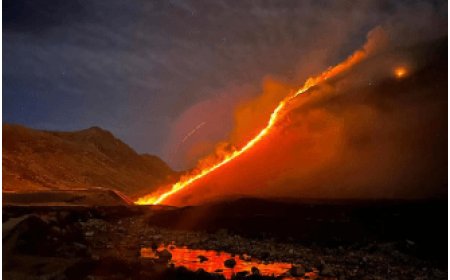
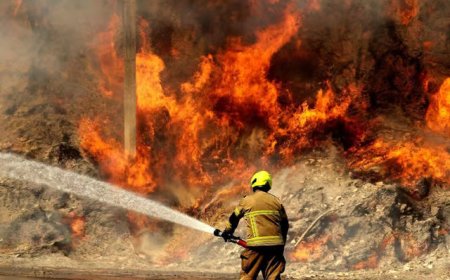
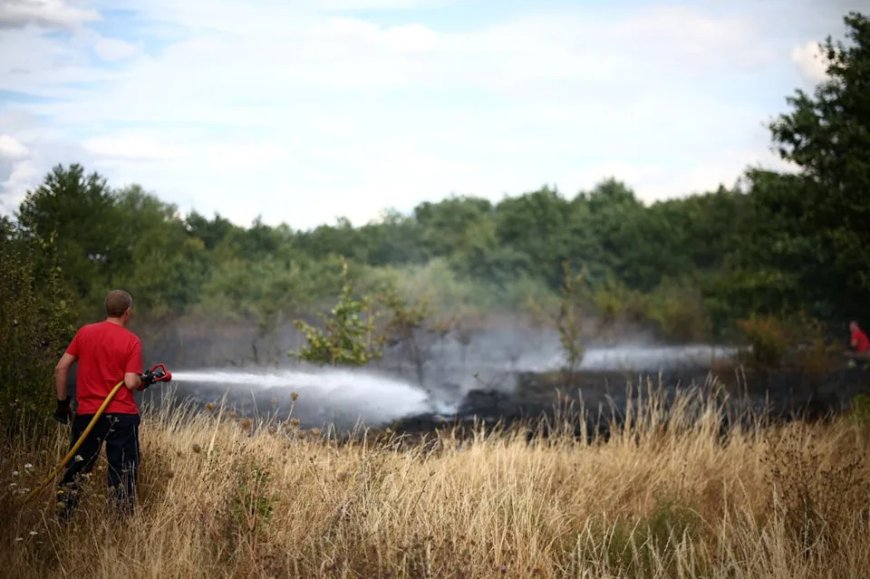
The tinder-dry conditions have fuelled a wave of grassland and forest fires across the country. In the West Midlands, a large blaze near Stourbridge Golf Club spread across more than 500 acres, destroying 19 homes and damaging 18 others, forcing residents to evacuate at short notice. Fire and rescue services in South Wales, Hampshire, Cambridgeshire and the West Midlands have all been dealing with major incidents simultaneously, stretching crews and resources.
Natural England has recorded 245 wildfires on protected Sites of Special Scientific Interest so far this year, underlining the toll the dry spell is taking on sensitive habitats as well as residential areas. Fire chiefs have cautiously welcomed recent forecasts of rain, though they stress that a large number of active blazes remain under control rather than fully extinguished.
Farmers, too, are feeling the strain, with industry figures warning that persistently dry conditions are placing pressure on every part of agriculture, from livestock welfare to crop yields. There have been renewed calls for government support, including tax incentives to help farmers build on-farm reservoirs, amid warnings that long-term water security is now a matter of food security.
What Residents Can Do
The Environment Agency has urged households in areas covered by a ban to stick to permitted alternatives, such as using a watering can or bucket for gardens, running washing machines only with full loads, and fixing dripping taps or leaking toilets, which can waste hundreds of litres of water a day. Officials are also encouraging households to install water butts to capture rainwater and to water plants during cooler parts of the day to reduce evaporation.
A Recurring Pattern
This is the third UK drought declared in the space of five years, following episodes in 2022 and 2025, feeding into a wider debate about how well the country's water infrastructure and reservoir capacity can cope with an increasingly volatile climate. With reservoirs depleted and no significant rainfall on the immediate horizon, officials say restrictions are likely to remain in place for weeks to come, and further water companies may yet be forced to follow Wessex Water's lead.
Next Article
What's Your Reaction?
 Like
0
Like
0
 Dislike
0
Dislike
0
 Love
0
Love
0
 Funny
0
Funny
0
 Angry
0
Angry
0
 Sad
0
Sad
0
 Wow
0
Wow
0