




























Oil Prices Surge, UK Retail Slows Amid Middle East Crisis
Brent crude nears $98 a barrel on Strait of Hormuz fears, squeezing UK households as retail growth slows to a four-month low and the FTSE 100 trades flat.

A Two-Speed Market as Oil Climbs
British households and businesses are bracing for another squeeze as oil prices push toward three-month highs, driven by escalating tension around the Strait of Hormuz. The FTSE 100 opened largely flat on Tuesday, closing Monday at 10,822.13 points, down 0.1 percent, as investors weighed the competing pressures of a resurgent energy sector against renewed weakness in UK consumer spending.
Brent crude, the international benchmark most relevant to UK petrol and energy prices, was trading around  98 mark. The rally comes after Iran threatened retaliation against US interests and renewed concern intensified over potential disruption to shipping through the Strait of Hormuz — the narrow waterway through which roughly a fifth of the world's oil typically passes.
Why Oil Keeps Climbing
The latest leg higher follows a volatile stretch for global energy markets. Crude has surged nearly 40 percent since the outbreak of conflict involving Iran earlier this year, with periodic spikes tied directly to attacks on tankers and oil infrastructure in the Gulf region. Reports over the weekend pointed to renewed strikes on Saudi Aramco facilities near the Red Sea, adding fresh uncertainty to a market already on edge.
Roughly seven million barrels of crude and refined products are still estimated to be moving through the Strait of Hormuz daily, according to industry figures, meaning the physical flow of oil has not been severed entirely — but the risk premium built into prices reflects genuine fears that could change quickly if hostilities escalate further.
Winners and Losers on the FTSE
The rally in crude has produced clear winners within the London market. Energy heavyweights BP and Shell were among Monday's best performers, each gaining roughly one percent as higher oil prices boosted expectations for their upstream earnings.
But the broader picture for UK consumer-facing businesses is considerably less comforting. According to the latest figures, UK retail growth has slowed to a four-month low, creating what analysts describe as a genuinely two-sided market: energy majors enjoying an earnings tailwind, while transport operators and consumer-facing retailers face rising cost pressures that threaten to erode already-thin margins.
The Squeeze on Household Budgets
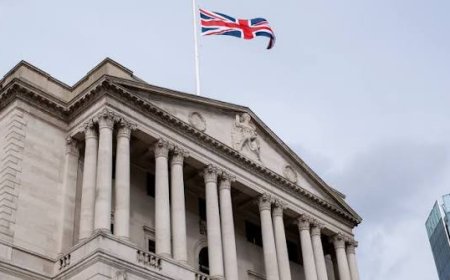
For ordinary consumers, the renewed climb in oil prices arrives at a particularly unwelcome moment. The Bank of England's own analysis, published earlier this year, warned that inflation was likely to rise through the second half of 2026 as a direct consequence of higher energy costs stemming from Middle East disruption — a scenario that now appears to be playing out largely as forecast.
UK inflation stood at 2.6 percent in June, buoyed temporarily by a brief ceasefire in the Middle East that eased pressure on petrol and diesel prices. That relief now looks increasingly fragile. Separate economic modelling from KPMG UK has suggested headline inflation could peak as high as 3.6 percent by September, driven by wholesale energy costs working their way through to consumer bills — a scenario energy analysts increasingly view as plausible given the current trajectory of crude prices.
What It Means for Interest Rates
The renewed inflationary pressure complicates the picture for the Bank of England's Monetary Policy Committee, which holds its next scheduled interest rate decision on 17 September. The Bank's base rate has sat at 3.75 percent since December last year, having previously been cut six times from a high of 5.25 percent.
With energy-driven inflation now threatening to reassert itself, many economists believe the case for further rate cuts this year has weakened considerably — meaning households and businesses may face higher borrowing costs for longer, even as broader economic growth continues to slow. The Office for Budget Responsibility has already downgraded its UK growth forecast for 2026 to 1.4 percent, citing precisely this combination of energy shocks and dampened consumer confidence.
What to Watch Next
Markets will be watching closely for any sign of a breakthrough in Strait of Hormuz negotiations, with reports suggesting Iran and Oman may be nearing an agreement on managing shipping through the corridor. Until that materialises into a confirmed deal, however, analysts expect oil prices — and the knock-on pressure on UK households — to remain elevated and volatile.
Next Article
What's Your Reaction?
 Like
0
Like
0
 Dislike
0
Dislike
0
 Love
0
Love
0
 Funny
0
Funny
0
 Angry
0
Angry
0
 Sad
0
Sad
0
 Wow
0
Wow
0