



















Andy Burnham Grilled in Parliament as Fiscal Pressure Builds
New Prime Minister Andy Burnham faced sharp questioning in his first Commons grilling, defending his government's spending plans as borrowing costs soar ahead of October's Budget.

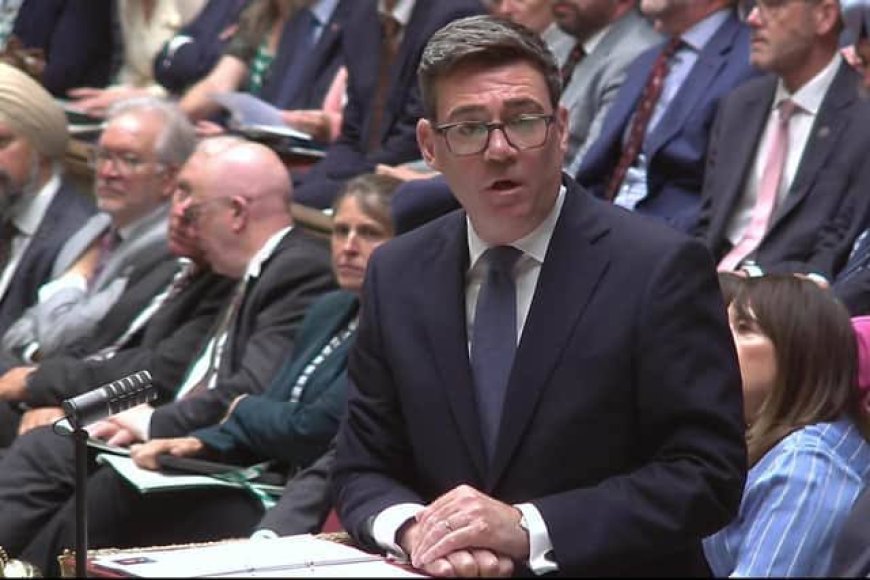
Burnham's Honeymoon Ends Quickly in the Commons
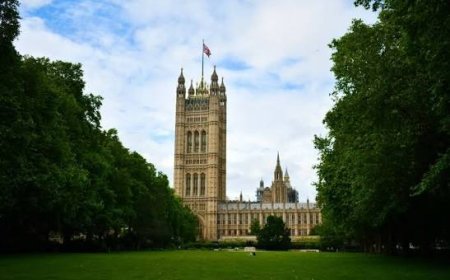
Just weeks into the job, Prime Minister Andy Burnham has discovered how quickly the pressures of Downing Street can mount. Facing MPs for his first full session of Prime Minister's Questions since replacing Keir Starmer in July, Burnham found himself defending his government's spending ambitions against a backdrop of surging borrowing costs, a sceptical opposition and, more unusually, criticism from within his own party's ranks.
A Rocky Path to Power
Burnham's arrival in Downing Street followed one of the more turbulent periods in recent Labour Party history. After the party suffered heavy losses in this year's local elections, internal dissatisfaction with Starmer's leadership boiled over into open pressure for him to step aside. Starmer announced his resignation in June, and Burnham the long-serving Mayor of Greater Manchester and a prominent internal critic of the government's direction emerged as the only serious contender, securing nominations from more than 90% of Labour MPs and being elected unopposed. He became party leader on 17 July and Prime Minister three days later, an unusually swift and smooth transition for a leader who had spent years positioning himself as an alternative voice within Labour.
That smooth start, however, has given way to a far tougher reality now that Burnham is the one answering for the government's record rather than critiquing it from the sidelines.
Defence Spending Takes Centre Stage
During Wednesday's session, Burnham faced sustained questioning over how the government intends to reconcile its defence commitments with a deteriorating fiscal picture. He told MPs that Britain "remains fully committed" to its military obligations, pledging to fully fund the Defence Investment Plan and to set out, at the forthcoming spending review, a path to meeting NATO's target by 2035. His answer was intended to reassure both allies and backbenchers, but it did little to satisfy critics on either side of the chamber.
Conservative leader Kemi Badenoch delivered the sharpest attack of the session, pressing Burnham on how his government could credibly fund its wide-ranging commitments given the scale of government borrowing, which has climbed alongside a sharp rise in gilt yields in recent weeks. Burnham pushed back forcefully, attributing much of the current market instability to the economic record left behind by the previous Conservative government rather than to decisions taken since Labour came to power.
More striking, perhaps, was criticism from within Labour's own benches. One backbench MP challenged the Prime Minister directly on defence policy, telling him that "vibes alone" would not be enough to reassure voters or allies a comment that drew audible agreement from opposition MPs and visibly raised eyebrows among some of Burnham's own colleagues. The exchange underscored the delicate balancing act facing a Prime Minister who built his political brand on promising a more empathetic, community-focused style of governing, but who must now translate that rhetoric into hard fiscal choices.
A Ten-Year Plan and a Cost-of-Living Pledge
Burnham used the session to reaffirm his intention to publish a long-term, ten-year plan for the country before the end of the year, framing it as a roadmap for "stronger public control" over essential services and a broader effort to make the economy "work for people." He also addressed international security concerns, referencing a recent attempted attack on Leipzig/Halle airport that the German government has attributed to Russia, and calling on British lawmakers across the political spectrum to stand in solidarity with Germany and Ukraine amid escalating regional tensions.
On the domestic front, Burnham reiterated his administration's determination to balance fiscal discipline with urgent relief for households squeezed by a persistent cost-of-living crisis an increasingly difficult needle to thread given that inflation has been ticking upward and borrowing costs have hit their highest level in nearly three decades.
The Road to the October Budget
Much of the pressure Burnham faced in the chamber traces back to the same forces roiling the bond markets: uncertainty about how Chancellor John Healey will pay for the government's promises without breaching its self-imposed fiscal rules. Healey is due to deliver his first Budget on 28 October, and the coming weeks are likely to bring intensifying scrutiny of exactly which commitments the government intends to prioritise, and which may need to be scaled back or delayed.
For Burnham, whose leadership was built on the promise of a fresh, more optimistic style of politics after the perceived caution of the Starmer years, the first parliamentary test suggests that optimism alone will not be enough to satisfy MPs, markets or voters. How he manages the tension between ambition and affordability over the coming months is likely to define whether his premiership can build lasting momentum or whether it becomes another chapter in a turbulent period for British politics.
What's Your Reaction?
 Like
0
Like
0
 Dislike
0
Dislike
0
 Love
0
Love
0
 Funny
0
Funny
0
 Angry
0
Angry
0
 Sad
0
Sad
0
 Wow
0
Wow
0