





















England Drought Spreads to 75% of the Country
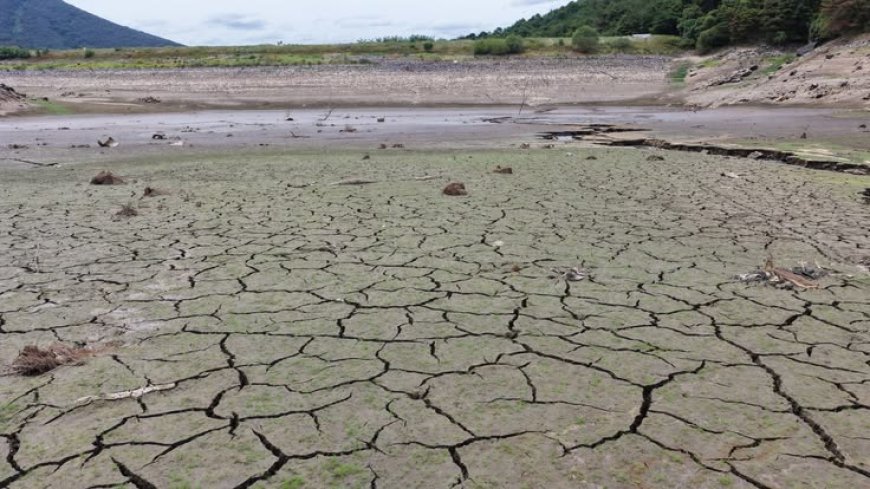
Drought has now been declared across almost three-quarters of England following the driest July on record and repeated summer heatwaves, prompting hosepipe bans.

A Summer of Extremes
Britain's reputation for grey skies and persistent rain has taken a battering this year. Drought has now been declared across almost three-quarters of England, government officials confirmed, capping off a summer that has seen the country's fifth heatwave of 2026 and repeated record-breaking temperatures. More than 50% of England was already in drought by the end of July, and conditions have deteriorated further since, with additional areas across the East Midlands, Lincolnshire, Kent, East Sussex and the South Downs joining the list in recent weeks.
It marks the third time in five years that England has experienced a drought, a frequency that would have been almost unthinkable a generation ago and one that scientists say is increasingly consistent with a changing climate rather than simple bad luck.
Records Tumbling Across the Country
The scale of this year's heat has been extraordinary by historical standards. Temperatures reached a provisional high of 38.1°C at Kew Gardens in London on 13 August, making it the fifth hottest day ever recorded in the UK. Nearby Pershore in Worcestershire recorded 38.0°C, while around 40 separate locations across central and southern England exceeded 36°C. By one measure, 2026 has now produced more days above 36°C and 37°C than any other year on record.
Rainfall, meanwhile, has been almost nonexistent in parts of the country. England and Wales both experienced their driest July on record, with England receiving just 10% of its usual long-term average rainfall for the month. Wales fared little better, with the northern half of the country receiving only around 5% of its typical rainfall, prompting Natural Resources Wales to declare a drought there in July covering areas including Anglesey and Clwyd.
A Human Toll, Not Just an Environmental One
The consequences of this year's heat have not been limited to dried-out reservoirs and browning lawns. Estimates published earlier in the summer suggested that more than 2,700 people may have died as a result of exceptional heatwaves in England and Wales during May and June alone, underlining how extreme heat has become a serious public health issue rather than simply an inconvenience.
The Environment Agency's National Drought Group, which convened earlier in the summer to discuss the dry spring and rising heatwave risk, warned at the time that England faced the possibility of a "flash drought" similar to the severe conditions experienced in 2022 — a warning that has since proven well-founded as conditions have continued to worsen through the summer months.
Water Companies Respond With Restrictions
As reservoir levels have fallen, water companies across the country have moved to restrict usage. Yorkshire Water introduced its first hosepipe ban in 27 years, joining South East Water, Southern Water and Welsh Water in enforcing similar restrictions in their own regions. For many households, this has meant a summer of watering cans rather than sprinklers, and mounting concern about how future summers might look if this pattern continues.
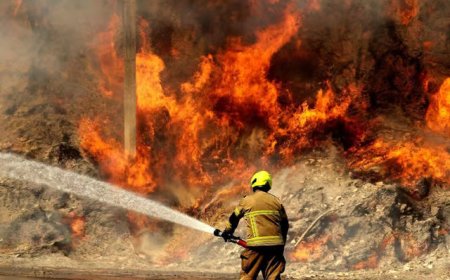
Officials have also flagged an "exceptional" risk of wildfires spreading during the driest periods, with some retailers reportedly pulling disposable barbecues from shelves as a precaution during periods of heightened fire risk — a small but telling sign of how seriously the danger has been taken this year.
The Bigger Climate Picture
Britain's experience this summer has not occurred in isolation. Across the Channel, French firefighters have battled a major wildfire in the south-west of the country, while low water levels on the Rhine in Germany have disrupted shipping, illustrating that this year's extreme weather has been a European-wide phenomenon rather than a uniquely British one.
Climate scientists have been consistent in linking this year's conditions to broader patterns of global warming, noting that summers of this intensity are becoming measurably more likely as a direct result of human-driven climate change. For policymakers, water companies and ordinary households alike, the challenge now is adapting to a version of the British summer that looks less like the damp, temperate stereotype of old — and increasingly like something altogether more extreme.
What's Your Reaction?
 Like
0
Like
0
 Dislike
0
Dislike
0
 Love
0
Love
0
 Funny
0
Funny
0
 Angry
0
Angry
0
 Sad
0
Sad
0
 Wow
0
Wow
0