














Burnham's First Month as PM: What Has Changed?
Four weeks into his premiership, Andy Burnham faces cost-of-living pressure, a reshaped Cabinet and a resurgent Reform UK. Here's where things stand.

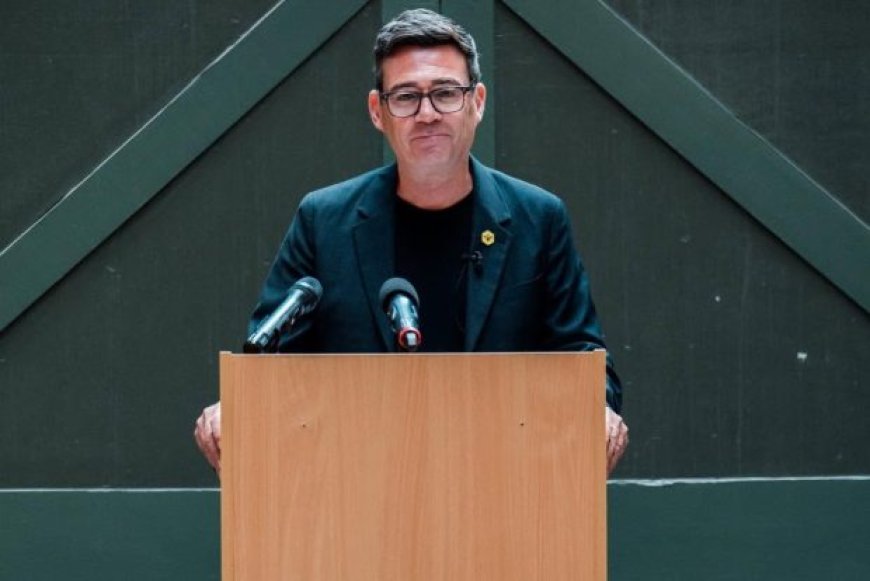
A Fast Rise From Manchester to Downing Street
A month ago, Andy Burnham was mayor of Greater Manchester. Today, he is Britain's prime minister — the seventh person to hold the office in a decade, and the fifth in four years. The scale of that turnover says as much about the state of British politics as anything Burnham has done since taking office.
His path to Number 10 was unusually compressed even by Westminster's recent standards. Burnham left the Manchester mayoralty in June to contest a by-election in Makerfield, Greater Manchester, which he won comfortably to re-enter the House of Commons after nearly a decade away. Weeks later, Keir Starmer announced he would step down as Labour leader and prime minister, citing the party's need for a fresh start after months of falling poll numbers and public frustration over the economy and immigration. Burnham was the only candidate to secure enough backing from Labour MPs to stand, and was confirmed as party leader after winning the support of 379 of 401 Labour parliamentarians at a special party conference.
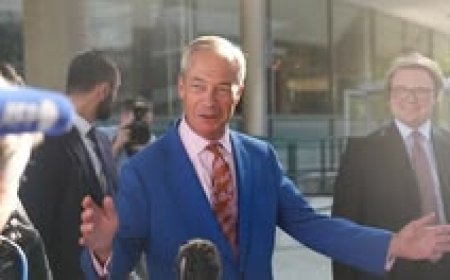
The formal handover followed the country's established, low-key ritual: Starmer travelled to Buckingham Palace to resign to King Charles III, and Burnham followed shortly after to be invited to form a government. There was no public vote in the process — a point Reform UK leader Nigel Farage seized on almost immediately, arguing that a leader chosen off the back of a single by-election victory lacked a genuine mandate and calling for an early general election.
What Burnham Promised on Day One
Standing outside Downing Street, Burnham struck a tone of contrition rather than triumph. He acknowledged that politics "has not been good enough" for voters and promised his government would try to do better. His central pledge was framed as a "circuit-breaker" moment for the country: what he described as the biggest changes to Britain's political and economic model in 40 years.
In practical terms, his early priorities were narrower and more immediate. He said measures to ease the cost of living would follow within days of taking office, alongside an instruction to officials to work toward ending rough sleeping. A more detailed ten-year strategy, he said, would come later in the year. Crucially, he was careful to stress that any support on living costs would not come at the expense of fiscal discipline — a signal aimed as much at financial markets as at voters.
On foreign policy, Burnham moved quickly to reassure allies of continuity. He named Ukrainian President Volodymyr Zelenskyy as one of the first foreign leaders he intended to speak with, pledging that British support for Kyiv would remain, in his words, resolute, and crediting Starmer's handling of the relationship. The message was echoed by international reaction to his appointment, which was broadly one of continuity rather than concern, including a statement from the European Council's president describing UK-EU relations as being on a positive trajectory.
A Reshaped Top Table
Burnham's Cabinet changes were sharper than his rhetoric. Rachel Reeves was removed as Chancellor, with John Healey — previously defence secretary, and one of the figures whose criticism of Starmer's defence spending helped precipitate his departure — appointed in her place. That switch was widely read in Westminster as a signal that the new government intends to loosen the purse strings, particularly on defence.
Yvette Cooper moved from the Foreign Office to become Health Secretary, part of a wider set of appointments that broadcasters described in blunt terms. BBC News' political editor called it a significant cull of ministers closest to Starmer, while Sky News described it as a purge of Starmer loyalists. Further personnel changes followed in the days after, including adjustments to junior ministerial roles and where responsibility for equalities policy sits within government.
The Challenges Ahead
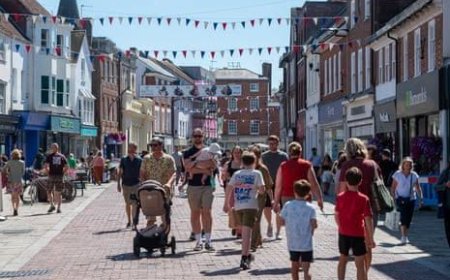
Burnham inherits a country little changed from the one that made Starmer's position untenable: sluggish growth, a persistently high cost of living, and a fractured political landscape in which Reform UK continues to draw support from disillusioned voters on both left and right. He has so far given no indication that he intends to call a general election before one is constitutionally required, which under current rules would be by 2029.
That decision carries risk either way. Governing without a fresh personal mandate leaves Burnham exposed to the same charge Farage is already making, while an early election would be a gamble against a fragmented opposition and Labour's own uncertain standing in the polls. For now, the new prime minister appears to be betting that visible, near-term action on living costs will do more to steady his premiership than a fight over its legitimacy.
Whether that bet pays off will become clearer as his promised cost-of-living measures and the wider ten-year plan take shape later this year — and as voters decide whether a change of face in Downing Street amounts to a genuine change of direction.
Next Article
What's Your Reaction?
 Like
0
Like
0
 Dislike
0
Dislike
0
 Love
0
Love
0
 Funny
0
Funny
0
 Angry
0
Angry
0
 Sad
0
Sad
0
 Wow
0
Wow
0