




















UK Shares Missile Tech With Ukraine, Angers Russia
PM Andy Burnham has authorised UK defence firm MBDA to share classified Storm Shadow/SCALP missile technology with Ukraine, prompting a furious response from the Kremlin.

Burnham makes first foreign trip a statement of intent
Britain will help Ukraine begin producing its own long-range cruise missiles, Prime Minister Andy Burnham announced during a visit to Kyiv to mark the 35th anniversary of Ukrainian independence — a move that instantly reignited tensions with Moscow and underlined how far Britain's military support for Kyiv has evolved since the war began.
Burnham confirmed that British defence manufacturer MBDA has been authorised to declassify technical information relating to UK-made components of the Storm Shadow missile, known in its French-built version as SCALP. The move will allow Ukraine, working alongside France, to establish local assembly lines and begin manufacturing the weapons domestically rather than relying solely on donated stock from allies.
The trip to Kyiv was Burnham's first overseas visit since taking office, a scheduling choice widely read in Westminster as a deliberate signal of continuity in Britain's support for Ukraine following the change of prime minister. While in the Ukrainian capital, Burnham also chaired his first meeting of the so-called Coalition of the Willing, the UK- and France-led grouping established under his predecessor to coordinate long-term defence and security assistance for Kyiv.
What the missile actually does
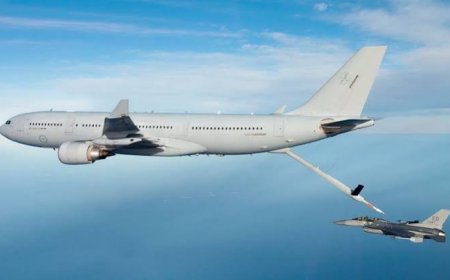
The Storm Shadow/SCALP is an air-launched, high-precision cruise missile with a range exceeding 250 kilometres, built using shared British and French technology. Measuring more than five metres in length, it is designed to be difficult to detect and capable of destroying hardened, fixed targets such as bunkers and critical infrastructure, according to manufacturer MBDA.
Britain became the first country to supply Ukraine with longer-range strike weapons back in 2023, when it donated a batch of Storm Shadow missiles that gave Ukrainian forces the ability to strike targets deep behind Russian lines, including in occupied Crimea. Wednesday's announcement marks a further evolution of that support, shifting from simply donating finished weapons to transferring the underlying manufacturing knowledge itself — a move defence analysts say represents a meaningful expansion of Western military assistance, even if its practical battlefield impact will take time to materialise.
Analysts have been quick to temper expectations. Experts quoted in UK and US coverage of the announcement cautioned that the declassification will not translate into operational missiles for Ukraine in the short term, nor does it address some of the country's more urgent battlefield needs. Nonetheless, officials view it as a significant statement of long-term intent, particularly given Ukraine's stated ambition to build a sustainable domestic defence manufacturing base rather than remaining permanently dependent on foreign donations.
Moscow reacts angrily
The announcement drew a swift and pointed response from the Kremlin. Spokesman Dmitry Peskov accused Britain of "fanning the flame" of the war by siding more actively with Kyiv, while separately warning that Russian forces were seeking to identify production sites for the missiles and other military equipment inside Ukraine, and that measures would be taken against any such facilities.
Burnham dismissed the Kremlin's framing during a press appearance alongside President Volodymyr Zelenskyy, responding to reporters with the pointed question of who, in his view, had actually started the conflict in the first place. He went on to describe Moscow's warnings as "outrageous threats" and reaffirmed that Britain's backing for Ukraine would continue for as long as necessary.
Speaking on the anniversary of Ukrainian independence, Burnham told the Ukrainian people directly that Britain stood behind them, both today and for as long as the conflict continues, framing the missile announcement as part of a broader package of continued British support rather than an isolated gesture.
Part of a wider diplomatic push
The Kyiv visit came against the backdrop of continued diplomatic manoeuvring around the war, with the United States, European powers and Ukraine all attempting to shape the contours of an eventual settlement. Burnham used the trip to formally take up Britain's co-chairing role in the Coalition of the Willing alongside France and Germany, with officials describing the coalition's remit as strengthening cooperation with Ukraine's domestic defence industry and coordinating the sharing of relevant military technology among allies.
The visit also carried personal significance for Burnham, whose administration has faced questions from some quarters about whether Britain's approach to Ukraine would shift following the change in Downing Street. By making Kyiv his first foreign destination and immediately authorising a substantive new form of military assistance, the Prime Minister appears to have sought to close down that speculation decisively.
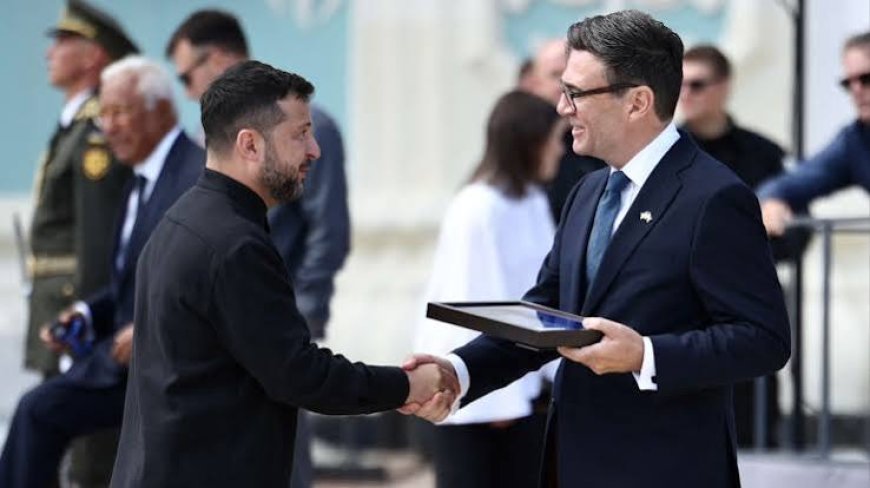
Zelenskyy welcomed Burnham at Horodetskyi House ahead of their bilateral meeting, with the Ukrainian leader using the Independence Day ceremonies to award state honours to a number of international partners, underlining the symbolic weight Kyiv continues to place on demonstrations of solidarity from allied leaders more than three years into Russia's full-scale invasion.
What happens next
Officials have not set out a detailed timeline for when Ukrainian-assembled missiles using the declassified UK components might become operational, and experts caution that any real-world impact will depend heavily on Ukraine and France's ability to establish functioning production lines under wartime conditions. For now, the announcement stands primarily as a political and strategic signal — one intended to reassure Kyiv of continued Western backing while sending an unmistakable message to Moscow that European support shows no sign of retreating.
What's Your Reaction?
 Like
0
Like
0
 Dislike
0
Dislike
0
 Love
0
Love
0
 Funny
0
Funny
0
 Angry
0
Angry
0
 Sad
0
Sad
0
 Wow
0
Wow
0