






















UK Drought 2026: Hosepipe Bans Spread as Crisis Deepens
England is facing its second consecutive summer drought, with nine water companies now enforcing hosepipe bans across the south and east. Southern Water is seeking even tighter restrictions for Hampshire and the Isle of Wight as officials warn of long-lasting environmental damage.

A Second Consecutive Summer of Drought Takes Hold
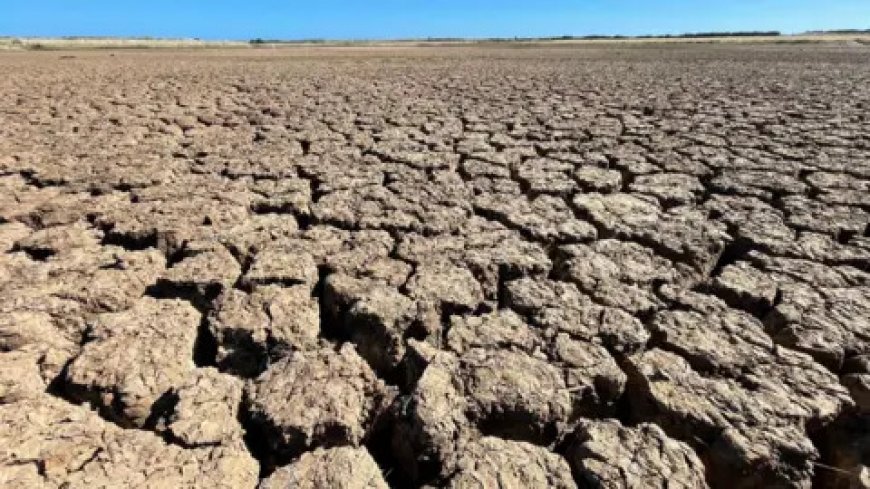
England is grappling with what officials are calling an "exceptionally serious situation" as drought conditions tighten their grip on large parts of the country for a second consecutive summer. Nine water companies now have Temporary Use Bans — commonly known as hosepipe bans — in force across southern, central and eastern England, restricting hosepipe use for gardens, cars, patios and paddling pools for a combined customer base running into tens of millions.
The scale of the crisis was underlined by the Met Office's confirmation that England and Wales have provisionally recorded their driest July on record, with southern England experiencing its driest month in a series of measurements dating back to 1836. That extraordinary dry spell has placed sustained pressure on reservoirs, rivers and aquifers already weakened by below-average rainfall stretching back through the winter.
Where the Bans Are in Force
As it stands, hosepipe restrictions are active across a wide swathe of the country. Thames Water's ban, covering Greater London, Luton, the Thames Valley, Surrey, Gloucestershire, north Wiltshire and far west Kent, has been in place since late July. South East Water extended its own restrictions to Sussex, Surrey, Hampshire and Berkshire in late July after Arlington Reservoir in Sussex fell to a level requiring intervention under the company's drought plan, with the area having received only around half its average rainfall since March.
South West Water's ban, covering Devon, Cornwall, parts of Dorset and Somerset and the Isles of Scilly, came into effect earlier this month, while Anglian Water, Essex and Suffolk Water, Affinity Water, Cambridge Water and Welsh Water in west Wales have all imposed their own restrictions in recent weeks. Southern Water's ban across Hampshire and the Isle of Wight remains active and, notably, the company has gone a step further by opening a public consultation on an even stricter Drought Order and Non-Essential Use Ban — a measure that would extend restrictions to some business customers, covering activities such as non-essential swimming pool filling, vehicle washing and window cleaning. That consultation closes today.
Not every region is affected in the same way. Yorkshire Water has confirmed it has no restrictions planned, with reservoir levels in the region reported to be healthier than at this point last year — a reminder that the drought's impact varies significantly depending on local rainfall patterns and reservoir capacity rather than being a uniform, nationwide event.
The Human and Environmental Cost
Helen Wakeham, who chairs the National Drought Group — a body bringing together the Environment Agency and the country's water companies — has described the situation in stark terms, warning of long-lasting impacts on the environment, wildlife and the wider economy. The group met again in late July to coordinate the national response, reflecting growing concern that this is not simply a temporary inconvenience for gardeners but a deeper structural stress test for the UK's water infrastructure.
Farmers are among those most exposed, with parched soil and low river flows threatening crop yields and livestock welfare in the worst-affected regions. Environmental groups have also raised alarm over the impact on rivers and wetland habitats, warning that prolonged low water levels can cause lasting damage to fish populations and aquatic ecosystems that may take years to recover even after rainfall returns to normal levels.
What a Hosepipe Ban Actually Means
Officially termed a Temporary Use Ban under Section 76 of the Water Industry Act 1991, a hosepipe ban prohibits the use of hosepipes, sprinklers and similar devices for watering gardens, washing cars, filling swimming pools or paddling pools. Watering cans and buckets remain permitted, and the restrictions do not affect showers, toilets or drinking water supplies. Only water companies — not local councils or central government — have the legal authority to declare a TUB, and any declaration must be advertised in local newspapers as well as on the company's website.
Breaching a hosepipe ban carries a fine of up to £1,000 for household customers, while a formal Drought Order, such as the one Southern Water is now consulting on, enables stricter penalties and broader restrictions covering some business water use as well.
What Happens Next
With national storage levels varying sharply by region and further hot, dry weather forecast in parts of the country, water companies and the Environment Agency are expected to keep the situation under close review over the coming weeks. Whether additional regions face restrictions — or existing bans are lifted — will depend heavily on rainfall between now and the autumn. For millions of households already adjusting to life with a hosepipe ban, the message from officials remains consistent: use water wisely, and expect these restrictions to remain a fact of summer life for the foreseeable future.
What's Your Reaction?
 Like
0
Like
0
 Dislike
0
Dislike
0
 Love
0
Love
0
 Funny
0
Funny
0
 Angry
0
Angry
0
 Sad
0
Sad
0
 Wow
0
Wow
0