



























UK's Hottest Summer on Record Confirmed by Met Office
The Met Office has confirmed that summer 2026 was the UK's hottest since records began in 1884, with climate change making the heat around 130 times more likely.

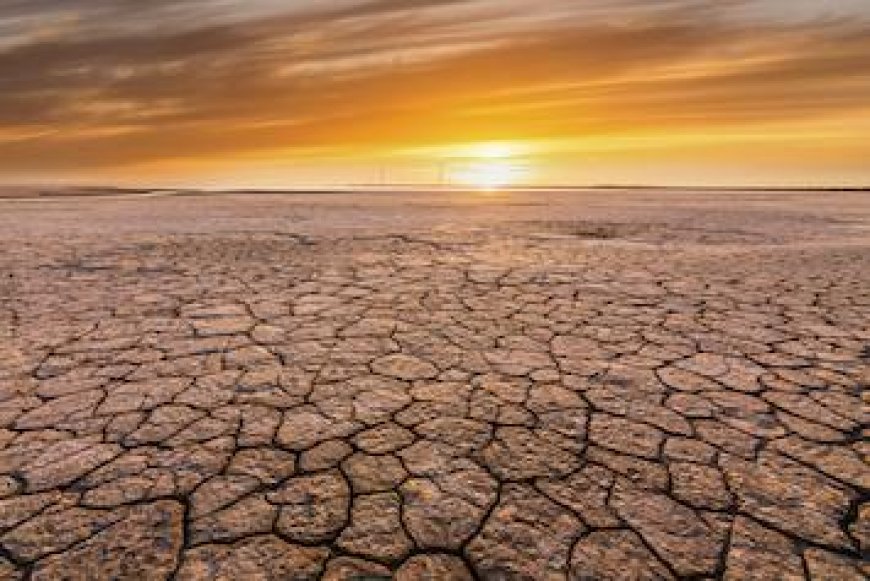
The Met Office has officially confirmed what many across the country had already suspected: summer 2026 was the hottest ever recorded in the UK, based on a dataset stretching back to 1884. The finding adds Britain to a growing list of nations experiencing record-breaking heat as the effects of a warming climate become increasingly difficult to ignore.
Breaking down the numbers
According to the Met Office's analysis, the season's mean temperature was made roughly 130 times more likely as a direct result of human-induced climate change, one of the clearest attributions the forecaster has made linking a specific UK weather record to the broader climate crisis. The confirmation follows a summer that saw repeated spells of intense heat across large parts of the country, prompting comparisons in some quarters to the famously scorching summer of 1976 — albeit with meteorologists cautioning that the underlying causes of the two events are very different.
Unlike the naturally occurring weather patterns behind previous hot summers, this year's extreme heat has been firmly linked by scientists to long-term warming trends driven by greenhouse gas emissions, reinforcing warnings that what once counted as an unusual heatwave is increasingly becoming the new normal for British summers.
Knock-on effects for businesses and daily life
The record heat has not been without consequence. Business groups have already flagged the operational strain that extreme temperatures placed on sectors ranging from warehousing and logistics to hospitality and transport, with firms managing temperature-sensitive supply chains among those most exposed. Rising summer temperatures have also fed into broader conversations about workplace safety, infrastructure resilience and the adequacy of the UK's ageing building stock, much of which was never designed with sustained extreme heat in mind.
Energy markets, too, felt echoes of the unusual conditions, with commentators noting that hot, dry summer weather across Europe has periodically added pressure to electricity demand even as separate factors — including geopolitical tensions affecting gas supplies — have driven up costs more broadly.
A sharp contrast with current conditions
The record-breaking confirmation arrives just as the UK experiences a distinctly different pattern of weather. Rather than sunshine, much of the country woke on Friday to a mixture of overnight rain, blustery winds and localised flood warnings, with the Environment Agency maintaining a number of active alerts across England. Forecasters describe the coming period as generally unsettled, with showers or longer spells of rain expected to continue across northern and western areas in particular, while the south and east see somewhat drier interludes.
Longer-range Met Office guidance suggests conditions may turn more settled again as September progresses, with the possibility — though far from a certainty — of temperatures trending above average later in the month, particularly across southern parts of the country. Forecasters have, however, been keen to temper speculation around some more dramatic headlines suggesting either an imminent September heatwave or a sudden turn towards a cold snap, stressing that both remain only two of several plausible outcomes at this stage.
What it means going forward
For climate scientists, the confirmation of summer 2026's record status serves as a further data point in an increasingly consistent pattern: extreme heat events that would once have been considered statistical outliers are becoming steadily more frequent and more probable as global temperatures continue to rise. Researchers say the scale of the increased likelihood attributed to climate change in this instance — around 130 times — underscores just how far the odds have shifted compared with a pre-industrial climate.
With the UK now facing a autumn of unsettled, changeable weather, attention is likely to turn increasingly towards questions of adaptation: how quickly homes, businesses and infrastructure can be adjusted to cope with a climate that is delivering hotter summers, and potentially more volatile weather in between, with greater regularity than ever before.
What's Your Reaction?
 Like
0
Like
0
 Dislike
0
Dislike
0
 Love
0
Love
0
 Funny
0
Funny
0
 Angry
0
Angry
0
 Sad
0
Sad
0
 Wow
0
Wow
0