

























Argentina Threatens Falklands Oil Sanctions, UK Pushes Back
President Javier Milei has vowed sanctions on oil firms drilling near the Falklands, reviving Argentina's sovereignty claim as the UK insists its position is "unwavering."

Milei's Falklands Ultimatum Puts Britain on Alert
More than four decades after Britain and Argentina went to war over a remote cluster of islands in the South Atlantic, the Falklands dispute is once again dominating headlines on both sides of the ocean. Argentine president Javier Milei used a televised national address to declare that his country would pursue sanctions against any oil company operating near the Falkland Islands, reasserting a sovereignty claim that London has never accepted and reigniting a diplomatic standoff that had simmered largely below the surface for years.
A Speech Aimed Squarely at London
In his address, Milei described Britain as a nation in decline and insisted Argentina would ultimately "prevail" in reclaiming what it calls the Malvinas. He framed the islands' return as a matter of historical and legal right rather than negotiation, arguing that shifting global sentiment had become more sympathetic to Buenos Aires' position. The centrepiece of his announcement was a pledge to sanction companies involved in oil exploration around the islands a direct threat to the Sea Lion project, a deep-sea development roughly 140 miles north of the Falklands being pursued by British firm Rockhopper Exploration alongside an Israeli energy partner.
Milei's government also indicated it intends to strengthen its military footprint in the region, including plans for a new base in Tierra del Fuego, the Argentine province closest to the islands. While Argentina has raised the sovereignty question periodically since losing the 1982 Falklands War, the specificity of Thursday's threats targeting named commercial operations rather than making a general diplomatic protest marked a notable shift in tone.
Why Now? Trump's Ambiguous Signal
The timing of Milei's intervention was no accident. Just days earlier, US President Donald Trump had suggested that American support for Britain in any future confrontation over the Falklands was "under review," a remark that stunned observers given Washington's traditional, if sometimes qualified, backing of London's position during the 1982 conflict and in the decades since. For a close ally of Trump's such as Milei, the comments appeared to open a diplomatic window, and he moved quickly to test it.
Analysts note that Trump's relationship with Milei has been unusually warm, built on shared ideological ground and personal rapport, which may explain why the Argentine leader felt emboldened to escalate now rather than through the more cautious diplomatic channels his predecessors typically used. Whether Trump's comments reflect a genuine shift in US policy or simply an off-the-cuff remark remains unclear, but the ambiguity alone has been enough to unsettle British officials.
Britain's Response: "Unwavering" Support for Self-Determination
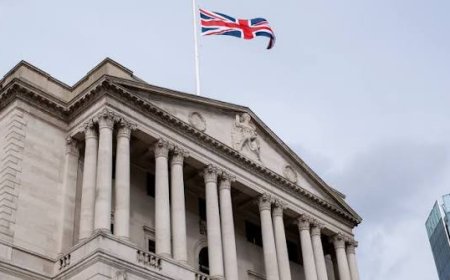
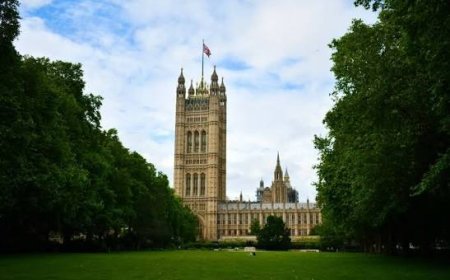
The UK government moved swiftly to shut down any suggestion that its position was open to negotiation. Foreign Secretary Ed Miliband stated that Britain would "resolutely uphold" the right of the roughly 3,500 Falkland Islanders to determine their own political future, a principle that has underpinned UK policy since the 1982 war and was reaffirmed decisively in a 2013 referendum in which islanders voted overwhelmingly to remain a British Overseas Territory.
British officials have long maintained that sovereignty over the islands is not up for discussion, pointing to continuous administration dating back to 1833 and the islanders' own clearly expressed wishes. Argentina counters that it inherited a legitimate claim from Spain and that Britain's presence amounts to nothing more than a historical land grab that predates any meaningful process of self-determination.
Economic and Strategic Stakes
Beyond the historical and political dimensions, the renewed dispute carries real economic weight. The Sea Lion project represents one of the most significant untapped oil developments in the South Atlantic, and any disruption whether through Argentine sanctions, legal challenges, or simple investor nervousness could delay or derail the venture. Energy analysts have warned that political risk of this kind tends to spook the kind of long-term capital such deep-sea projects require, regardless of how enforceable Argentina's threatened sanctions ultimately prove to be.
Strategically, a more assertive Argentine posture, backed by plans for expanded military infrastructure near the islands, will also concern British defence planners already stretched by commitments elsewhere. The Falklands garrison, while modest, has long been viewed in London as a sufficient deterrent precisely because Argentina's capacity to project force into the South Atlantic remains limited. Whether that calculus changes will depend heavily on how far Milei is willing and able to follow through on his rhetoric.
For now, the standoff remains a war of words rather than of arms. But with an unpredictable signal from Washington complicating a relationship that has held steady for more than 40 years, both London and Buenos Aires appear to be recalibrating their positions in real time and the Falklands, once again, sit at the centre of the story.
What's Your Reaction?
 Like
0
Like
0
 Dislike
0
Dislike
0
 Love
0
Love
0
 Funny
0
Funny
0
 Angry
0
Angry
0
 Sad
0
Sad
0
 Wow
0
Wow
0