





























UK Wage Growth Slows to 4.2% as Labour Market Weakens, BoE Rate Cut Hopes Rise
UK wage growth eased to 4.2% in Q4 2025, lowest in years, as unemployment climbs to 5.2%. Private sector pay slows sharply to 3.4%. Markets anticipate BoE rate cuts in 2026.


UK Wage Growth Eases as Labour Market Shows Signs of Weakening
London, United Kingdom — Newly released data from the Office for National Statistics (ONS) shows that wage growth in the United Kingdom slowed toward the end of 2025, underscoring ongoing softening in the jobs market and strengthening expectations for changes in monetary policy.
According to the ONS figures, average weekly earnings—excluding bonus payments—rose by just 4.2% in the final three months of 2025, down from 4.4% in the preceding quarter. This deceleration in pay increases matched economists' forecasts and represents the lowest pace of wage growth in several years.
Analysts have highlighted that the slowdown in earnings—particularly in the private sector—points to a cooling labour market after an extended period of unusually robust wage expansion. For many policymakers, wages are a critical barometer of inflationary pressure because rapid pay rises can feed into broader price increases across the economy.
Shifting Labour Market Dynamics
The weaker wage growth figures accompany other worrying trends in employment data. Unemployment has climbed to around 5.2% , a level not seen since early 2021, and reflects the strain on workers as hiring activity softens. Meanwhile, private sector wage growth was notably subdued compared with the public sector.
ONS data indicates that private sector annual pay growth slowed sharply to around 3.4% , its lowest rate in roughly five years, while public sector wages still grew at a faster pace—partly influenced by earlier pay awards being implemented in 2025 than in 2024.
This divergence between private and public sector pay trends reveals important dynamics:
-
Private employers are responding to weaker demand and higher costs by restraining wage increases
-
Public sector pay reflects delayed awards and catch-up adjustments from previous periods
-
The gap suggests underlying labour market softness that may accelerate if private sector weakness persists
For many workers, the slowdown in pay increases comes against a backdrop of moderate inflation. While wages are still rising in nominal terms, when adjusted for price increases, real incomes have expanded by only marginal amounts, leaving many households with limited improvement in purchasing power.
Employment and Payroll Trends
The number of people on company payrolls also fell markedly over the last year, contributing to broader concerns about the resilience of the UK labour market. In the final quarter alone, payroll figures declined, particularly in sectors such as retail and hospitality, where employment has remained under pressure amid high operating costs and subdued consumer demand.
Key employment indicators:
-
Payroll employment declined in Q4 2025
-
Retail and hospitality sectors most affected by weakening demand
-
Job vacancies have fallen from peak levels
-
Economic inactivity remains elevated, particularly among older workers
A fall in payroll employment is often seen as an early indicator that labour demand is weakening, especially when paired with slower wage growth. Economists argue that such trends can signal that businesses are reluctant to hire or retain workers at higher wage rates unless there is stronger demand growth in the wider economy.
Sectoral Breakdown
The slowdown is not uniform across all parts of the economy:
Manufacturing and construction:
These sectors have seen moderate wage growth as global demand remains uncertain and input costs fluctuate.
Services sector:
Consumer-facing services, particularly hospitality and retail, have experienced the sharpest slowdown as households tighten spending.
Financial and business services:
Still relatively robust but showing signs of cooling as corporate confidence wanes.
Public sector:
Wage growth remains higher due to previously negotiated settlements, though future increases may moderate as fiscal constraints bite.
Impact on Monetary Policy
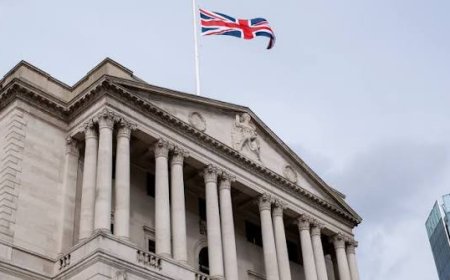
The slowdown in wage growth and signs of labour market cooling come at a crucial time for the Bank of England (BoE) , which has been closely monitoring pay trends as part of its inflation-fighting strategy. Since 2022, the BoE has kept interest rates relatively high in an effort to bring inflation back toward its 2% target, but slowing wage pressures could ease upward price pressures and give policymakers greater flexibility.
Financial markets have already priced in a stronger likelihood of rate cuts this year, with investors expecting at least one or two reductions in borrowing costs by the end of 2026. These expectations reflect growing belief that weaker wages and a softer labour market will lessen inflationary risks and reduce the need for high interest rates.
Market expectations:
-
February 2026: Rates expected to hold at current levels
-
Mid-2026: First potential rate cut increasingly priced in
-
Year-end 2026: One or two cuts anticipated by markets
However, some economists caution that the evidence is still mixed, noting that headline inflation remains above target and that more consistent data will be needed before the BoE makes a decisive policy shift. They also point out that public sector pay trends could continue to exert upward pressure on overall earnings, complicating the central bank's task.
Broader Economic Context
The slowdown in wage growth occurs within a wider context of muted economic activity in the UK. Recent GDP figures showed only modest growth in late 2025, and business confidence has been affected by concerns over fiscal policy and higher employment costs.
Factors weighing on the labour market:
Higher employer costs:
Recent increases in national insurance contributions and minimum wage rates have raised the cost of hiring, potentially dampening employment growth.
Subdued consumer demand:
Households facing higher mortgage costs and limited real income growth have reduced spending, particularly in discretionary sectors.
Fiscal uncertainty:
Businesses remain cautious about investment and hiring ahead of clearer signals on tax and spending policy.
Global economic conditions:
Weakness in major trading partners, particularly in Europe, has reduced export demand.
Some employers have cited these factors as directly affecting hiring intentions, with many opting to delay recruitment or reduce headcount through natural attrition rather than expand payrolls.
Real Earnings and Living Standards
While nominal wage growth has slowed, the impact on living standards depends on the relationship between pay increases and inflation. With CPI inflation currently running at around 3% , the 4.2% wage growth translates to modest real income gains for many workers.
However, this average masks significant variation:
-
Workers in high-wage sectors have seen stronger real gains
-
Those in low-wage, consumer-facing industries may be falling behind
-
Pensioners and those on fixed incomes face particular pressure
-
Mortgage holders continue to adjust to higher borrowing costs
Looking Ahead: What to Watch
As the year progresses, both policymakers and market participants will be watching upcoming labour market releases closely for signs that wage growth and employment conditions are undergoing structural changes.
Key indicators to monitor:
-
Monthly wage data for signs of further deceleration
-
Unemployment claims and payroll employment figures
-
Job vacancies as a leading indicator of labour demand
-
Sectoral breakdowns revealing where weakness concentrates
-
Bank of England communications for policy signals
Conclusion: The Era of Rapid Pay Rises Fades
The latest ONS data suggests that the era of rapid pay increases may be fading, with implications not just for workers but for monetary policy and the UK's economic outlook.
For workers, slower wage growth combined with moderate inflation means limited improvement in real incomes—a reality that will constrain consumer spending and household budgets.
For businesses, the cooling labour market offers some relief from wage pressures but reflects weaker demand conditions that limit pricing power and revenue growth.
For policymakers, the data provides evidence that inflationary pressures from the labour market are easing, potentially opening the door for rate cuts later in 2026—though they will require consistent confirmation before acting decisively.
The UK labour market is no longer overheating. The transition toward a softer jobs environment appears well underway, with slower pay rises and rising unemployment clear markers of that shift.
Wage growth slows. Unemployment rises. Rate cuts beckon. The UK's economic landscape is shifting.
What's Your Reaction?
 Like
0
Like
0
 Dislike
0
Dislike
0
 Love
0
Love
0
 Funny
0
Funny
0
 Angry
0
Angry
0
 Sad
0
Sad
0
 Wow
0
Wow
0